
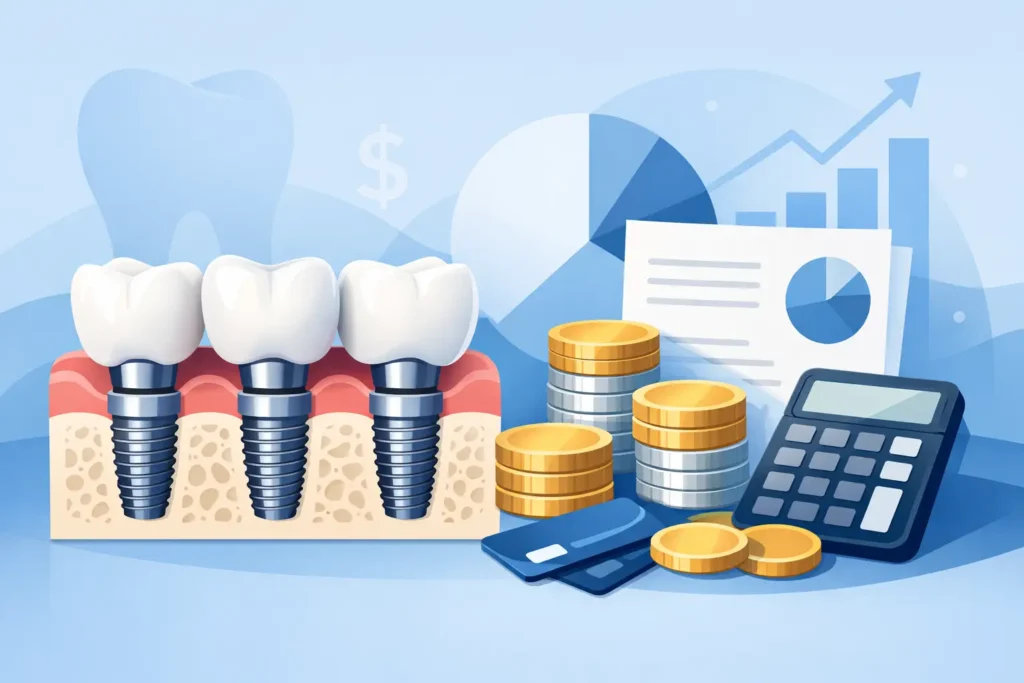
Sticker shock usually hits after the words full mouth implants. Many patients expect a high number, but the real question is not just zirconia teeth on implants cost. It is what you are actually getting for that price – the material, the implant design, the number of implants, the digital planning, and the experience of the team placing and restoring the case.
If you are comparing treatment in the U.S. to treatment in Mexico, the gap can be dramatic. That does not mean every lower quote is a better deal, and it does not mean every high quote includes better dentistry. You need to know what drives the cost and what affects long-term value.
What zirconia teeth on implants cost usually includes
When patients ask about zirconia teeth on implants cost, they are often asking about a full-arch bridge attached to implants, not a single crown. In most full-mouth cases, zirconia refers to the final fixed prosthesis – the strong, esthetic arch of teeth that is secured over multiple implants.
That total fee may include extractions, bone reduction if needed, implant surgery, a same-day temporary bridge, healing visits, and the final zirconia restoration. In other offices, those items are priced separately. This is why two quotes can look far apart even when they are describing a similar result.
For a single implant with a zirconia crown, the price structure is different. But for most patients researching this term, the real comparison is full-arch treatment such as All-on-4, All-on-6, or All-on-X.
Average zirconia teeth on implants cost in the U.S.
In the United States, a full arch with implants and a final zirconia bridge often falls in the range of roughly $20,000 to $35,000 per arch. Some premium centers are higher, especially if the case includes sedation, extensive extractions, grafting, or more implants than a standard All-on-4 plan.
For both arches, many patients see totals between $40,000 and $70,000 or more. That range is broad because no two mouths are exactly the same. A patient with stable bone and straightforward implant placement is very different from someone with infection, failing bridgework, severe wear, or long-term denture use.
The biggest mistake is assuming that every quote labeled zirconia is equal. Some centers use monolithic zirconia for strength and longevity. Others may use layered designs that look attractive but can chip more easily. The lab quality, bite design, and fit matter as much as the word zirconia on the estimate.
Why the price changes so much
Number of implants
A fixed arch might be supported by four, five, six, or more implants. More implants can increase cost, but they can also improve load distribution and support in certain cases. The right number depends on bone availability, bite force, arch shape, and the treatment plan.
Temporary vs final prosthesis
Same-day temporary teeth are common in modern full-arch treatment. They let patients leave with a fixed smile while the implants heal. Then the final zirconia arch is delivered later. If a quote includes both phases, it will be higher than a quote showing only the surgical stage.
Bone condition and extractions
If teeth need to be removed, infection cleaned out, or bone reshaped for a proper full-arch foundation, cost goes up. These are not optional add-ons in many cases. They are part of creating a stable, long-term result.
Digital planning and guided surgery
Clinics using CBCT imaging, intraoral scanning, and guided surgery usually provide a more controlled workflow. That technology adds value because it improves planning, implant positioning, and prosthetic accuracy. It may not be the cheapest approach, but it often supports a more predictable one.
Prosthetic design and lab quality
A well-made zirconia bridge is not just a block of material. The strength, contours, bite balance, esthetics, and passive fit all matter. Better labs and better restorative planning tend to cost more, and this is one area where cutting corners can become expensive later.
Zirconia vs acrylic hybrid – why many patients pay more
Acrylic hybrid prostheses usually cost less than zirconia. For some patients, especially those managing budget carefully, acrylic can be a reasonable starting point. But zirconia is often chosen for its strength, stain resistance, more refined feel, and long-term appearance.
That does not mean zirconia is automatically best for everyone. It is heavier, more premium in price, and must be designed correctly to avoid excessive stress. The right choice depends on bite force, anatomy, expectations, and overall treatment goals.
Patients who want a more durable final prosthesis and are tired of repeated repairs often lean toward zirconia. Patients focused on the lowest possible upfront cost may choose acrylic and plan to upgrade later. The key is knowing the trade-off before treatment begins.
Zirconia teeth on implants cost in Mexico
This is where many U.S. and Canadian patients start paying close attention. In Mexico, zirconia teeth on implants cost is often significantly lower than in the U.S., even when treatment includes advanced imaging, guided surgery, temporary fixed teeth, and a final zirconia bridge.
For a full arch, patients may find pricing that is 40% to 70% lower than comparable U.S. treatment, depending on the case and clinic. That lower cost is typically driven by lower overhead and operating costs, not necessarily lower clinical standards.
Still, price alone is not the decision. You want to know who is planning the case, what material is being used, whether the surgery is guided, how many trips are required, and what happens if an adjustment is needed. A cheap quote with vague details is not a bargain. It is a risk.
At a specialist-led clinic model like Expertos Dentista E Implantes, the advantage for cross-border patients is not just savings. It is the combination of digital planning, faster turnaround, same-day temporary teeth in many cases, and clear coordination for out-of-town treatment.
What to ask before accepting a quote
Ask whether the quote is for one arch or both. Ask how many implants are included and whether extractions, sedation, imaging, temporaries, and the final zirconia bridge are part of the same price.
You should also ask what kind of zirconia is being used, how the final prosthesis is made, and how follow-up is handled. If the office cannot explain the treatment sequence clearly, that is a problem.
A serious full-arch provider should be able to review your CT scan, explain if you are a candidate for All-on-4 or need a different approach, and give you a realistic timeline. This is especially important if you are traveling. You do not want surprises after arrival.
Is paying more for zirconia worth it?
Often, yes – but not always in the way patients think. Zirconia is worth more when the case is well planned, the bite is stable, and the prosthesis is designed for the patient’s anatomy and force patterns. That is where you see the benefit in durability, esthetics, and confidence.
It is less about buying the most expensive material and more about investing in a complete system that works. A lower-cost prosthesis that fractures, stains, or needs repeated repair can become the more expensive choice over time.
That said, some patients benefit from staging treatment. They may begin with a fixed temporary or acrylic final while planning for zirconia later. A good clinic will tell you when that approach makes sense and when it does not.
How to compare value, not just price
The best quote is the one that is complete, specific, and clinically appropriate. If one office offers a much lower number, compare the details line by line. You may find that the temporary bridge, final zirconia, imaging, or surgical components are missing from the cheaper estimate.
You should also weigh convenience and speed. For many patients, especially those traveling from the U.S. or Canada, fewer trips and a coordinated treatment plan matter. Time away from work, repeat travel costs, and uncertainty all have a price too.
If you are considering treatment abroad, send your CT scan today and get a real case review instead of guessing from online averages. The right team will tell you whether you are a candidate, what your treatment should include, and what your zirconia investment actually buys.
A confident smile should feel solid when you chew, natural when you speak, and worth the decision you made to restore it properly.