
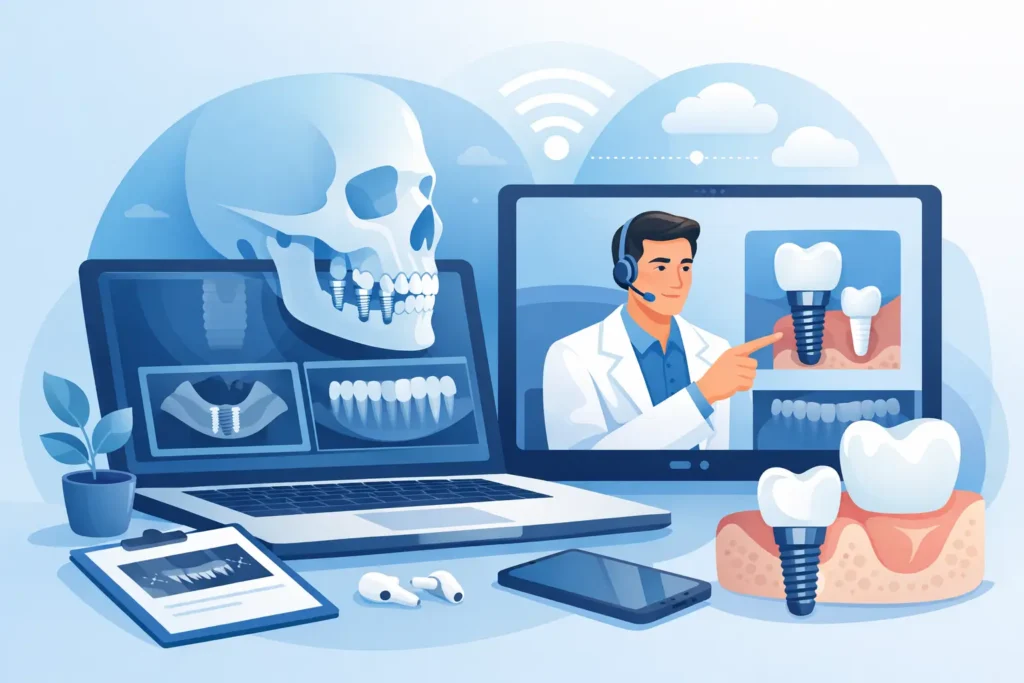
If you are considering dental implants in Mexico, the smartest first step is a remote CT scan dental implant evaluation. It answers the questions that matter before you book a flight – whether you are a candidate, how much bone is available, whether extractions are needed, and what kind of implant solution makes sense for your timeline and budget.
For patients traveling from the U.S. or Canada, this is not just a convenience. It is the foundation of predictable treatment. A basic phone call can only go so far. A panoramic image helps, but it does not show the full three-dimensional picture. A CT scan gives the surgical team the detail needed to assess bone volume, sinus position, nerve location, infection, failing teeth, and the real condition of the jaw.
Why a remote CT scan dental implant evaluation matters
Implant treatment is not one-size-fits-all. Two patients may both want fixed teeth, but one may be a strong candidate for All-on-4 while another may need additional implants, extractions, or a staged approach. Looking at a CT scan remotely allows a specialist to make those distinctions early.
This matters because treatment planning affects everything else – cost, length of stay, sedation planning, temporary teeth, healing expectations, and whether same-day fixed teeth are realistic. Patients often assume they need a single implant or a simple bridge, only to learn that the issue is broader. Others fear they have been told they need major grafting when a digitally planned full-arch solution may avoid that.
A remote evaluation helps reduce guesswork. It does not replace the in-person exam, but it gives you a much clearer path before you travel.
What your CT scan can reveal before treatment
A proper cone beam CT scan shows what standard dental images often miss. That is especially important in full-mouth rehabilitation and advanced implant cases.
The scan can reveal bone density and bone shape in each area being considered for implants. It can show hidden infection around teeth that may still look salvageable on the surface. It can also identify sinus anatomy in the upper jaw and the exact path of the inferior alveolar nerve in the lower jaw, both of which are critical for safe implant placement.
For patients with failing crowns, old bridges, loose teeth, broken teeth at the gumline, or long-term denture wear, the CT scan often tells a very different story than photos alone. It helps the doctor assess whether a tooth can realistically be saved, whether full-arch treatment is more efficient, and whether immediate-load temporary fixed teeth are possible.
That level of clarity is one reason remote case review has become so valuable for cross-border implant patients.
What happens during a remote CT scan dental implant evaluation
The process is straightforward. You send your CT scan and any relevant dental records, such as recent X-rays, photos, or a short summary of your dental history. The specialist reviews the case with implant planning in mind, not just general dentistry.
From there, you typically receive an initial assessment of candidacy, likely treatment options, and a preliminary estimate. If the case is complex, the scan may also be reviewed in the context of digital surgical planning, prosthetic design, and whether immediate temporaries are appropriate.
At this stage, honesty matters more than speed. A good remote evaluation should tell you not only what is possible, but also what may change after the in-person exam. Soft tissue condition, bite relationship, active periodontal disease, and overall oral health still need to be confirmed clinically. That is not a weakness in the process. It is good medicine.
Who benefits most from remote implant case review
This type of evaluation is especially useful for people comparing implant options across borders. If you have been quoted high fees in the U.S. for full-mouth reconstruction, multiple implants, or full-arch fixed teeth, a remote review helps you determine whether your case can be treated efficiently in Mexico without wasting time on unnecessary travel.
It is also valuable for patients with major restorative history. If you have repeated crown failures, loose bridges, advanced gum disease, missing back teeth, or dentures that no longer fit well, your case usually requires more than a basic consultation. A CT-based review gives a better starting point.
Patients who want speed also benefit. Many people looking at All-on-4, All-on-6, or All-on-X want to know whether they can arrive, have surgery, and leave with temporary fixed teeth in a short visit. A remote review helps determine if that timeline is realistic.
What a remote evaluation can and cannot confirm
A remote CT scan review is powerful, but it is not magic. It can identify likely treatment paths with much greater accuracy than photos alone. It can often show whether grafting may be avoided, whether immediate implants are possible after extraction, and whether enough structure exists for a fixed full-arch solution.
At the same time, there are limits. It cannot fully measure how inflamed the gums are on the day of surgery. It cannot replace checking your bite directly or evaluating how the soft tissue responds clinically. If you grind heavily, have uncontrolled medical conditions, or have hidden restorative complications under existing work, those details may affect the final plan.
That is why the best clinics present remote evaluations as a strong first stage, not a final promise detached from reality. Predictability comes from combining digital diagnostics with in-person confirmation.
Why this process is ideal for dental tourism patients
Traveling for implant treatment only makes sense if the process is organized. Patients want clear answers before they commit time off work, airfare, lodging, and treatment funds. A remote CT scan evaluation supports that.
It lets the clinic estimate how many days you may need to stay, whether extractions and implants can be done in one surgical visit, and whether your case fits an immediate-load protocol. It also gives you a more realistic budget range before you travel.
For many U.S. and Canadian patients, that means less uncertainty and more control. You are not arriving for a vague consultation and hoping for the best. You are arriving with a plan that has already been reviewed by a specialist using three-dimensional imaging.
That difference matters even more in full-arch cases, where timing, prosthetic design, and bone anatomy all need to work together.
Cost, speed, and specialist planning
Patients researching implants abroad are usually balancing three priorities – quality, affordability, and speed. A remote evaluation helps bring those together.
From a cost standpoint, it can prevent you from pursuing the wrong treatment. Some patients are told they need many individual implants when a full-arch solution may be more efficient. Others are planning on removable dentures when they may qualify for fixed teeth. Getting the right diagnosis early helps you compare real options.
From a speed standpoint, remote review shortens the path to treatment. The team can prepare for surgery in advance, coordinate your visit more efficiently, and reduce surprises that cause delays.
From a quality standpoint, the real value is specialist-led planning. Digital implant dentistry works best when the scan is interpreted within the full picture of function, esthetics, bite, and long-term stability. That is especially important when your goal is not just replacing teeth, but rebuilding confidence and daily comfort.
How to prepare for your remote CT scan dental implant evaluation
Make sure your scan is recent and taken at a reputable imaging center. If you already have one from the last several months, it may be enough, depending on what treatment has happened since. Include any information about pain, missing teeth, loose teeth, dentures, prior implants, gum disease, or medical conditions that may affect healing.
Photos can help, especially smiling photos and close-up shots of your teeth, but they should support the scan rather than replace it. If you have a treatment quote from another office, that can also provide context. Sometimes the most valuable part of a remote review is not hearing that you need implants. It is understanding which implant approach is the right one.
At Expertos Dentista E Implantes, this type of evaluation is designed to give patients practical answers fast. That means candidacy, likely treatment options, expected timing, and a clearer sense of savings compared with U.S. pricing – all before travel.
If you have been delaying treatment because local prices are too high or the process feels overwhelming, sending your scan is a strong next move. A well-planned implant case starts long before surgery day, and the right evaluation can turn uncertainty into a real treatment path.