
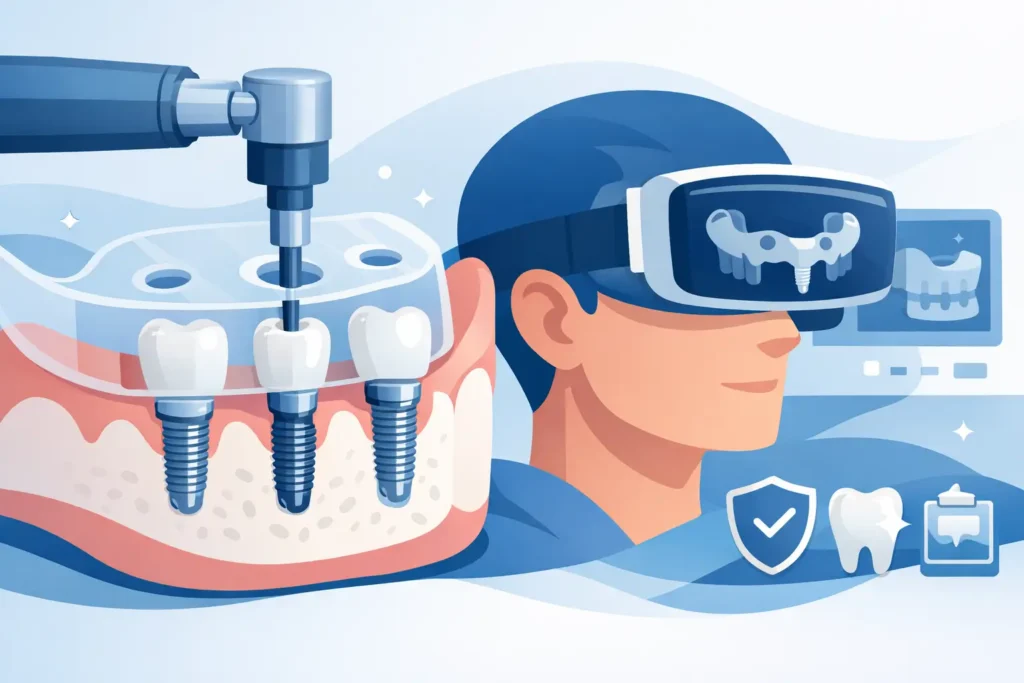
When a patient needs implants, the real question is not just price. It is whether the treatment will be accurate, stable, and planned well enough to avoid surprises. That is where guided surgery dental implants benefits stand out. For patients considering full-arch restoration, multiple implants, or same-day fixed teeth, guided surgery can make the process more predictable from the first scan to the final smile.
This matters even more if you are traveling for treatment. You want fewer unknowns, a shorter chair time when possible, and a surgical plan built before you ever sit in the dental chair. Guided implant surgery is designed to do exactly that.
What guided implant surgery actually means
Guided implant surgery is not guesswork done with better marketing. It is a digital process that uses your CBCT scan, intraoral records, and prosthetic planning to determine where each implant should go before surgery begins. A surgical guide is then created to help the doctor place implants in the planned position, angle, and depth.
In simple terms, the implants are not being placed by estimation alone. The surgery is based on a detailed map of your bone, anatomy, bite, and restoration goals. That level of planning is especially valuable in full-mouth cases, where implant position affects not just healing, but the fit, strength, and appearance of the final bridge.
Guided surgery dental implants benefits for full-arch patients
One of the biggest guided surgery dental implants benefits is precision. In implant dentistry, a few millimeters matter. The location of the sinus, nerve canals, bone density, and soft tissue all influence where implants can be placed safely and effectively. Guided planning helps the surgeon work within those anatomical limits while still aiming for strong support for the final prosthesis.
For full-arch patients, precision also affects esthetics and function. If implants are placed with the restoration in mind, the temporary teeth and final zirconia bridge can be designed to sit more naturally, distribute force better, and provide a more confident smile line. This is not just a surgical advantage. It is a restorative advantage too.
Another major benefit is efficiency. Guided surgery often reduces unnecessary adjustments during the procedure because much of the decision-making has already happened in the planning phase. That can mean a smoother appointment, especially for patients receiving several implants or same-day temporary fixed teeth.
There is also a safety benefit. Guided planning helps identify limitations before surgery, not during it. If bone volume is reduced, if angulation needs correction, or if certain implant sites are less favorable, those issues can be evaluated ahead of time. Patients get a clearer treatment plan, and the doctor works with more control.
Why digital planning improves confidence
Patients often say they want permanent teeth, but what they really want is confidence. Confidence that the implants will hold. Confidence that healing will be manageable. Confidence that they are not making a rushed decision in another country just because the savings are attractive.
Digital planning helps build that confidence because it creates a more transparent process. Instead of hearing a vague explanation of where implants may go, patients can be evaluated through scans and diagnostic records before treatment starts. For many international patients, this allows for remote case review and a more realistic timeline before travel is booked.
That pre-planning can be a major advantage if you have been told different things by different offices. A guided workflow gives the case structure. It helps answer practical questions early, including whether you are a candidate for All-on-4, All-on-6, or a different full-arch design.
Better fit between surgery and the final teeth
A common mistake in implant treatment is thinking only about placing implants into available bone. Good implant dentistry has to think beyond surgery. The implants must support a prosthesis that looks good, feels stable, and functions well over time.
This is one of the most overlooked guided surgery dental implants benefits. The surgery can be planned backward from the ideal tooth position. That means the final bridge is not forced to compensate for poorly placed implants later. In many cases, this improves emergence profile, esthetics, hygiene access, and bite balance.
For patients replacing failing teeth or loose dentures, that difference is huge. It can affect speech, chewing comfort, and how natural the result feels day to day.
Can guided surgery mean less invasive treatment?
Sometimes, yes. Guided surgery can support a flapless or minimally invasive approach in appropriate cases, which may reduce trauma to the tissue and improve recovery comfort. That does not mean every guided case is flapless, and it should not be marketed that way automatically. Some patients still need extractions, bone reduction, grafting, or broader surgical access.
But when the anatomy and treatment plan allow it, guided surgery can reduce surgical guesswork and limit unnecessary tissue manipulation. For patients worried about swelling, recovery time, or being away from work too long, that can be a meaningful advantage.
Still, the right approach depends on the case. Advanced technology improves decision-making, but it does not replace clinical judgment.
Why this matters for patients traveling from the U.S. or Canada
If you are traveling for implant treatment, speed alone is not enough. Fast treatment only makes sense when the planning is strong. Guided surgery supports that by making the process more organized before you arrive.
That can help with scheduling, same-day temporary delivery, and reducing last-minute surprises. It is one reason many patients looking for high-value care in Mexico prefer clinics that use CBCT-based planning, surgical guides, and specialist-led implant workflows rather than a basic extraction-and-implant approach.
At Expertos Dentista E Implantes, this type of planning is especially relevant for complex full-arch cases, where efficiency and precision need to work together. Patients are not just looking to save money. They want to save time and avoid rework. Guided surgery helps support that goal.
What guided surgery does not guarantee
A serious clinic should be honest about this. Guided surgery is a powerful tool, but it is not magic. Implant success still depends on bone quality, oral health, bite forces, medical history, smoking habits, healing response, and the skill of the surgeon and restorative team.
It also does not mean every case follows the exact digital plan without adjustment. Sometimes surgery reveals information that requires the doctor to adapt. That is why experience matters. The best outcomes come from combining digital accuracy with specialist judgment, not replacing judgment with software.
Patients should also understand that guided surgery may not be necessary in every simple single-implant case. But for multiple implants, full-arch reconstruction, and same-day fixed solutions, the value becomes much clearer.
Who benefits most from guided implant surgery
Patients with extensive tooth loss, failing bridges, advanced wear, or unstable dentures are often strong candidates for a guided approach. It is especially helpful when several implants need to work together to support a fixed bridge. In these cases, angulation and spacing are critical.
It can also benefit patients with limited bone, prior dental work, or a need for immediate temporary teeth. When treatment involves extractions, implant placement, and a temporary prosthesis in a short timeline, precise planning becomes far more than a convenience. It becomes a key part of risk control.
If you have been told you need full-mouth rehabilitation, do not just ask how many implants will be used. Ask how the surgery is planned, how your anatomy is evaluated, and how the implants relate to the final teeth.
The bottom line for patients comparing options
If you are comparing implant clinics, guided surgery should not be treated as a trendy add-on. It is one of the clearest signs that a clinic takes planning seriously. For patients investing in full-arch restoration, that can mean better implant positioning, a more efficient procedure, stronger prosthetic design, and a more predictable path to fixed teeth.
The cost savings of traveling for care are real, but value comes from more than a lower fee. It comes from getting advanced treatment done with the right technology, the right surgical planning, and the right team behind it. If you are considering implants and want clarity before you commit, send your CT scan today and get a case review built around precision, safety, and long-term results.