
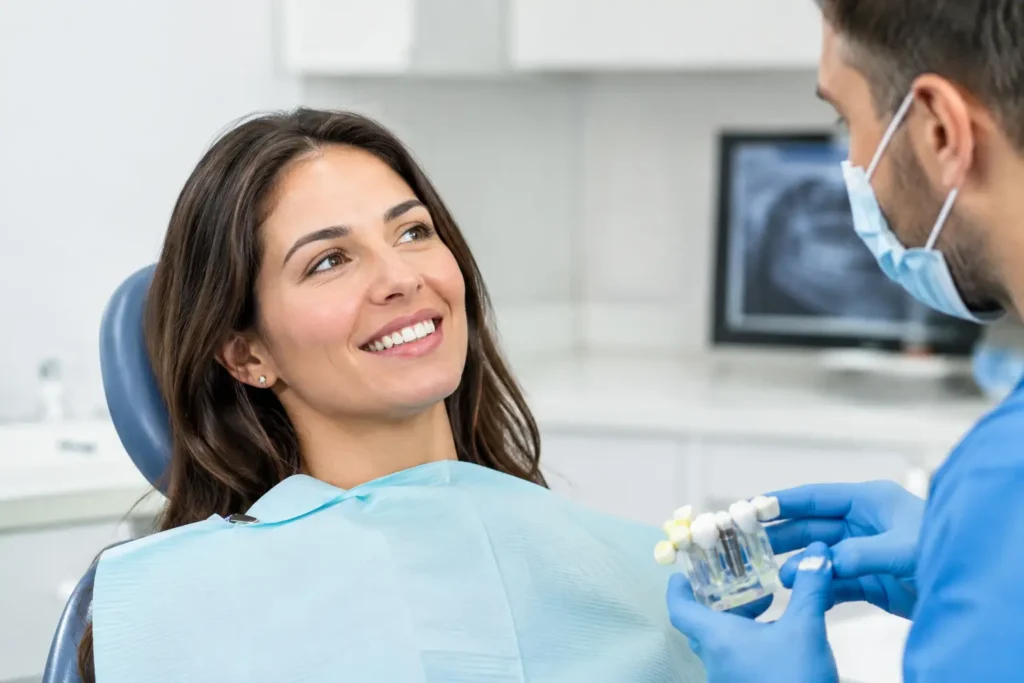
A loose denture can turn a restaurant meal, a family photo, or an ordinary conversation into something you plan around. For many people with failing teeth or extensive tooth loss, same day implant candidates can leave the clinic with fixed temporary teeth on the day of surgery – but qualification depends on far more than simply wanting a faster result.
Same-day teeth are not a shortcut around proper planning. They are the result of a carefully coordinated digital workflow, adequate bone support, stable implant placement, and a treatment plan designed by an implant specialist. For the right patient, this approach can replace uncertainty with a clear path toward a stable, natural-looking smile.
What does same-day implant treatment mean?
Same-day implant treatment usually refers to immediate-load full-arch rehabilitation, often called All-on-4, All-on-6, or All-on-X. During one surgical appointment, failing teeth may be removed, dental implants are placed, and a fixed temporary bridge is attached.
The temporary bridge is not the final zirconia restoration. It is a functional, cosmetic provisional designed to let you leave with teeth while your implants integrate with the jawbone. After the healing period, usually several months, the final bridge is designed for long-term strength, fit, and appearance.
This difference matters. A temporary fixed bridge allows patients to avoid going home without teeth or relying on a removable denture during early healing. It still requires a disciplined recovery period, including a soft-food diet and follow-up care, to protect the implants while the bone heals around them.
Who are the best same day implant candidates?
The strongest candidates are patients who need to replace most or all teeth in one arch, have unstable or painful dentition, or are frustrated with removable dentures. They also need clinical conditions that allow implants to be placed with excellent initial stability.
A patient does not need to have perfect teeth or perfect gums to qualify. In fact, many full-arch patients have advanced decay, gum disease, broken teeth, or old bridgework that has failed. The question is whether the remaining bone, anatomy, bite, and overall health support a predictable implant plan.
Adequate bone, or a smart way to work around it
Bone volume is one of the first factors an implant specialist evaluates. Bone loss after tooth loss is common, especially in the back of the upper jaw. However, low bone does not automatically rule out same-day treatment.
With digitally planned All-on-X treatment, implants can often be angled to use stronger available bone and avoid anatomical structures such as the sinus cavity or nerve canal. Guided surgery helps transfer that plan precisely to the clinical procedure. Some patients still need grafting, sinus treatment, or a staged approach. A CT scan determines which path is safest.
Healthy enough for surgery and healing
Controlled diabetes, managed high blood pressure, and many common medical conditions do not necessarily prevent implant treatment. What matters is that your medical history is reviewed carefully and that healing risks are addressed before surgery.
Smoking is a major consideration because it can interfere with blood supply and bone healing. Patients who smoke may still be evaluated, but they should expect a direct conversation about increased risk and the benefits of stopping before and after treatment. Certain medications, prior radiation therapy to the jaw, uncontrolled diabetes, and immune conditions also require individualized planning.
A bite that can be planned predictably
Full-arch implants are not only about placing fixtures in bone. The new teeth must work with your bite, facial support, jaw movement, and esthetic goals. Patients who grind or clench can still receive implants, but they may need specific prosthetic design choices and a protective nightguard after final teeth are delivered.
Your provider will also assess how much vertical space is available for the bridge. A beautiful, durable restoration needs enough room for the implant components and high-quality material without creating a bulky appearance or an unstable bite.
Commitment to recovery instructions
Immediate-load treatment succeeds because the implants remain stable during healing. Patients must be ready to follow dietary restrictions, maintain excellent hygiene, attend planned checkups, and avoid testing the temporary bridge with hard or sticky foods.
This is not a minor detail. The temporary teeth can look complete and feel life-changing, yet the implants underneath are still healing. Patients who view recovery as part of treatment, not an inconvenience after treatment, are better positioned for a successful result.
When same-day teeth may not be the right choice
A responsible implant clinic will not promise same-day fixed teeth to every patient before reviewing diagnostic records. Sometimes a staged protocol is safer and more predictable.
Severe infection, insufficient bone for secure placement, uncontrolled systemic disease, or anatomy that requires grafting can change the timeline. In other cases, a patient may be a candidate for implants but not for immediate loading. The implants can be placed first and restored after healing.
That does not mean the case has failed or that the patient has fewer options. It means the treatment plan is being matched to biology rather than marketing. Long-term stability should always take priority over a one-day timeline.
Why a CT scan matters before you travel
A panoramic X-ray offers useful information, but it cannot provide the three-dimensional detail needed for serious full-arch planning. A cone beam CT scan allows the specialist to assess bone width, bone height, sinus position, nerve pathways, infection, and the condition of teeth below the gumline.
For patients traveling from the United States or Canada, a remote CT scan review can make the process much more efficient. You can send your scan and medical information for a preliminary evaluation before arranging travel to Cabo San Lucas or Tijuana. This helps identify whether you are likely to qualify for an immediate-load plan, whether extra procedures may be needed, and how much time to reserve for your visit.
A remote review is not a substitute for an in-person exam. It is a practical first step that reduces surprises and gives you a clearer picture of treatment before you commit.
What happens during a same-day full-arch procedure?
The exact sequence varies by case, but the goal is consistent: remove compromised teeth when necessary, place implants in the strongest available bone, and secure a fixed temporary bridge with a planned bite and natural smile design.
Digital planning and guided surgery can improve accuracy by mapping implant positions in advance. Intraoral scans, photographs, CT imaging, and bite records all contribute to the design. On surgery day, sedation and pain-control options are reviewed so patients can feel comfortable throughout the procedure.
After surgery, you leave with fixed temporary teeth rather than a removable denture, assuming the implants achieve the stability required for immediate loading. Mild swelling, bruising, and tenderness are normal during the first days. Most patients can manage recovery with prescribed instructions, rest, soft foods, and a realistic expectation that healing takes time.
Temporary teeth first, zirconia final teeth later
Patients often ask why the final zirconia bridge is not placed immediately. The answer is precision. As swelling resolves and the implants integrate, the gum tissue and bite can change. Making the final bridge too early can compromise fit, esthetics, or long-term function.
The provisional bridge gives the clinical team a chance to evaluate speech, smile line, comfort, bite, and facial support. It also lets you experience your new teeth in daily life and provide feedback before the final zirconia restoration is made.
Zirconia is valued for its strength, biocompatibility, and natural appearance. The final restoration is where the treatment moves from an immediate transformation to a long-term solution designed around your facial features and functional needs.
How to find out if you qualify
The fastest way to determine whether you are a candidate is to request a specialist-led evaluation with recent dental records and a CT scan when available. Include your medical history, current medications, smoking status, and clear photos of your smile and teeth. Honest information leads to a safer recommendation.
At Expertos Dentista E Implantes, the objective is not to force every case into the same protocol. It is to identify the most predictable route to fixed teeth using digital planning, guided surgery, and a treatment timeline that respects your health.
If you have been told you need extensive dental work, are tired of removable dentures, or want to understand whether immediate fixed teeth are realistic, send your CT scan today for a free consultation. The right treatment plan should give you more than a fast result – it should give you a stable foundation to smile, eat, and speak with confidence.