
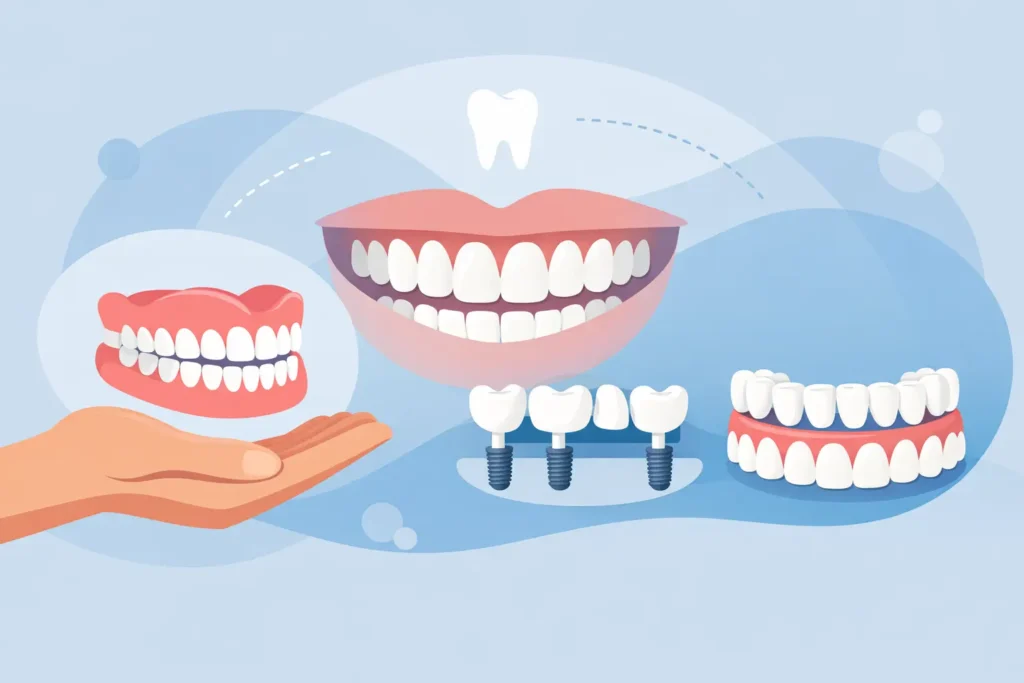
If you are tired of dentures that slip, click, rub, or make eating feel like a chore, you are probably searching for a denture alternative fixed teeth solution that actually feels stable. That usually means implant-supported teeth – a treatment designed to replace removable dentures with a full-arch restoration that stays in place, looks natural, and lets you chew with more confidence.
For many patients, this is not a cosmetic upgrade. It is a quality-of-life decision. People come in after years of failing teeth, repeated dental work, loose dentures, or the frustration of avoiding certain foods and smiling carefully in photos. What they want is simple – fixed teeth, a clear plan, and a result that does not feel temporary forever.
What does denture alternative fixed teeth really mean?
In practical terms, this phrase usually refers to full-arch implant treatment. Instead of a removable denture resting on the gums, a surgeon places dental implants into the jawbone and uses those implants to support a fixed bridge. Depending on the case, that may be an All-on-4, All-on-6, or All-on-X approach.
The key difference is retention. Traditional dentures sit on top of the gums and rely on suction, fit, and sometimes adhesive. Fixed implant teeth are attached to implants, so they do not move the same way. Patients often notice the biggest difference when speaking, eating, and biting into food they had given up on.
That said, not every fixed solution is identical. Some patients receive same-day temporary fixed teeth after surgery, then return later for a stronger final zirconia prosthesis after healing. Others may need extractions, bone smoothing, or treatment for infection before the final plan is completed. The right approach depends on bone availability, bite force, medical history, and long-term goals.
Who is a good candidate for denture alternative fixed teeth?
Most people considering this treatment fall into one of three groups. The first is current denture wearers who are unhappy with movement, sore spots, or reduced chewing power. The second is patients with multiple failing teeth who are trying to avoid years of patchwork dentistry. The third is people with advanced dental problems who want one comprehensive reset instead of repeated repairs.
You may be a candidate even if you have been told your case is complex. Many full-mouth implant patients need extractions, infection control, or coordinated surgical planning before fixed teeth can be placed. Digital imaging and guided surgery have changed what is possible, especially for patients who were once told they had few options.
The only honest answer, though, is that eligibility depends on diagnostics. A CT scan, oral exam, and review of your medical background matter more than assumptions. Some patients are ideal for immediate-load fixed teeth. Others need staged treatment for the safest result.
Why patients choose fixed teeth over removable dentures
The appeal is obvious, but the benefits go beyond comfort. Fixed implant teeth typically offer stronger stability, improved bite function, and better day-to-day confidence. Many patients also feel that their face looks more supported compared with long-term denture wear, especially when tooth loss has changed their bite or lower facial profile.
There is also a practical benefit. Removable dentures can be affordable upfront, but many people end up paying repeatedly for relines, replacements, adhesives, repairs, and adjustments. If the denture fit keeps changing as the jawbone resorbs, the frustration can become expensive over time.
Implant-supported full-arch treatment usually costs more at the beginning, but it is designed as a more stable long-term solution. That does not mean it is maintenance-free. Fixed teeth still need professional care, hygiene visits, and periodic monitoring. But for the right patient, the trade-off is worth it.
The most common fixed teeth options
When patients search for a denture alternative fixed teeth treatment, they are usually comparing a few full-arch models without realizing it. One option is a fixed hybrid bridge supported by four or more implants. This is common in All-on-4 and All-on-6 treatment, where strategically placed implants support a full set of teeth.
Another option is a stronger, highly esthetic final prosthesis made from zirconia. This is often chosen by patients who want long-term durability, a natural appearance, and a more premium final restoration. Zirconia is especially popular in full-mouth rehabilitation because it combines strength with a clean, lifelike look.
There are also implant-retained overdentures, which are more stable than traditional dentures but still removable. For some patients, this is a smart middle ground. For others, it does not meet the goal because they want teeth that stay fixed in the mouth. That is why terminology matters. If your priority is truly fixed teeth, make that clear during the consultation.
What the treatment timeline usually looks like
This is one of the biggest questions for patients traveling for care. In many full-arch cases, treatment starts with a remote review of your CT scan and photos. That allows the clinical team to assess bone levels, plan implant positions digitally, and determine whether same-day temporary fixed teeth are realistic.
Once approved, the in-person phase often includes extractions if needed, implant placement, and delivery of a temporary fixed bridge. The temporary is not the final prosthesis, but it lets you leave with teeth attached to implants instead of waiting months without a solution.
After healing and implant integration, the final phase involves records, bite refinement, and fabrication of the definitive bridge, often in zirconia. Healing time varies. Some cases move quickly. Others require more patience to protect the final result. Fast treatment is valuable, but controlled healing is part of good implant dentistry.
Cost matters – and so does what is included
For many U.S. and Canadian patients, cost is the reason this search begins. Full-mouth implant treatment in the United States can be financially out of reach, especially when multiple arches, sedation, temporary teeth, and final prosthetics are involved.
That is why cross-border care has become a serious option, not a backup plan. The right clinic can offer advanced implant treatment, digitally planned surgery, and premium materials at a fraction of U.S. pricing. In many cases, patients can save up to 70 percent versus comparable treatment in the USA.
Still, price alone is not enough. You need to know what is included. Are the temporary fixed teeth part of the quoted fee? Is the final zirconia bridge included, or priced separately? Are extractions, sedation, and follow-up built into the plan? A low number can stop looking low once the missing pieces show up.
Why technology changes the experience
Implant dentistry is not just about placing screws in bone. The planning is where predictability starts. CT scans, intraoral scanning, digital bite records, and guided surgery help reduce guesswork and improve accuracy.
For full-arch cases, that matters. Implant angles, prosthetic space, smile line, and bite balance all affect the final result. A digital workflow helps the team plan not just where the implants go, but how the teeth will function and look afterward.
This is especially important for patients traveling from the U.S. or Canada. You want a clinic that can evaluate your case before you travel, organize treatment efficiently, and minimize unnecessary appointments. Speed is valuable, but precision is what protects the investment.
Questions to ask before choosing a clinic
If you are comparing providers, ask who leads the implant planning, whether your case is reviewed from a CT scan before travel, and whether guided surgery is used for full-arch treatment. Ask what type of temporary teeth you receive and what material is used for the final restoration.
You should also ask about recovery, pain control, and how bite adjustments are handled if you are an out-of-town patient. A serious clinic should be able to explain the process clearly, including where the limits are. Not every patient can get the same-day version of treatment, and honest case selection is a good sign, not a red flag.
At Expertos Dentista E Implantes, this process is built around specialist-led planning, remote case review, advanced digital workflow, and full-arch solutions designed for patients who want fixed teeth without U.S.-level pricing.
Is fixed teeth treatment worth it?
For the right patient, yes. If you are done with removable dentures, repeated repairs, and the uncertainty of failing teeth, fixed implant treatment can be life-changing. But the best results come from matching the treatment to the patient, not forcing every case into the same model.
Some people need a straightforward All-on-4 plan. Others benefit from additional implants, staged healing, or a more customized zirconia final. The goal is not just to get teeth fast. The goal is to get stable, functional, attractive teeth that hold up over time.
If you are researching a denture alternative fixed teeth solution, start with a real diagnostic review, not a guess. Send your CT scan, ask direct questions, and make sure the plan is built around your anatomy, your timeline, and your long-term result. Good full-arch treatment should give you more than teeth – it should give you back the confidence to stop planning your life around what your mouth cannot do.