
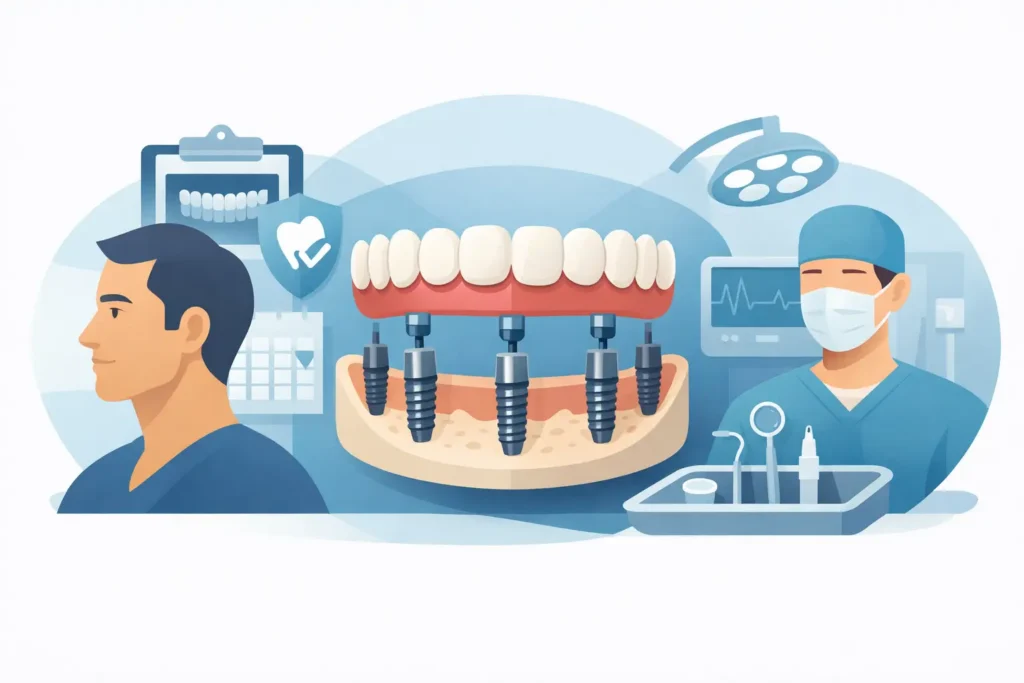
The patients who do best with full-arch implants usually start preparing before they ever sit in the treatment chair. If you are researching how to prepare for All on 4 surgery, the goal is not just to show up on time. The goal is to arrive medically ready, mentally clear, and organized for a smoother procedure and recovery.
All-on-4 is a major restorative treatment, but it is also highly planned. With digital imaging, guided surgery, and a specialist-led workflow, much of the success starts before surgery day. That matters even more if you are traveling from the U.S. or Canada for treatment and want fixed teeth without the drawn-out process and pricing many patients face at home.
How to prepare for All on 4 surgery before you travel
The first step is getting a real case evaluation, not guessing based on symptoms or photos alone. A full-arch implant case depends on bone volume, bite forces, gum condition, existing infections, and whether any remaining teeth need to be removed. That is why a CT scan is often the most useful starting point. It gives the surgical team a three-dimensional view of your anatomy and allows them to determine whether you are a candidate for immediate-load temporary teeth, whether extractions are needed, and whether any additional procedures may be required.
If you have recent dental records, gather them early. This may include your CT scan, panoramic X-rays, a medication list, and a summary of medical conditions such as diabetes, heart disease, autoimmune conditions, or osteoporosis. If you take blood thinners or medications that affect bone metabolism, your implant team needs to review that well in advance. Some medications require coordination with your physician. Others simply change how the surgery is planned.
Preparation also means being honest about smoking, vaping, clenching, and past implant failures. Patients sometimes downplay these issues because they do not want to be told no. In reality, this information helps the doctor reduce risk. A specialist can often still move forward, but the timeline, materials, or healing strategy may need to change.
Medical and dental steps that matter most
A clean, stable mouth heals better than an inflamed one. If you have active gum disease, abscesses, or severe infection, those issues need to be factored into the plan. In many cases, they can be treated as part of the All-on-4 process, but your team needs to know exactly what they are dealing with.
You should also review your general health before surgery. If your blood sugar is poorly controlled, if your blood pressure runs high, or if you are recovering from another medical condition, that should be stabilized first whenever possible. Implant surgery is routine for experienced teams, but your body still needs the best conditions for healing.
Nutrition matters more than many patients expect. If you have been chewing poorly for years, there is a good chance your diet has narrowed. Before surgery, focus on protein, hydration, and balanced meals. Better nutritional status supports healing, immune function, and energy after the procedure. If you know you will be on a soft-food diet afterward, stock up in advance so recovery feels manageable instead of stressful.
What to stop doing before surgery
One of the biggest preparation mistakes is assuming the surgery itself is the only thing that matters. Healing starts with what you do in the days and weeks before treatment.
Smoking is a major concern. Nicotine reduces blood flow and raises the risk of implant complications, delayed healing, and prosthetic failure. The closer you can get to stopping before surgery, the better. If quitting completely feels difficult, be direct with the surgical team so they can explain the real risks.
Alcohol should also be limited before and after surgery, especially if you will be taking antibiotics, anti-inflammatory medication, or pain medication. Excess alcohol can interfere with healing and hydration.
Do not make medication changes on your own. Some patients stop aspirin or other prescriptions without approval because they think it is safer for surgery. That can create more risk, not less. Follow the instructions given by your implant provider and your physician.
If you clench or grind heavily, say so before treatment. This does not automatically disqualify you, but it affects how the temporary teeth and final zirconia bridge are designed. Full-arch implant treatment is not one-size-fits-all, especially in high-force bites.
Planning your trip and recovery time
If you are traveling for care, logistics are part of surgical preparation. Book enough time, not just enough flights. Full-arch treatment often involves diagnostics, surgery, delivery of a temporary fixed prosthesis, and follow-up checks. Same-day teeth are possible in many cases, but that does not mean same-day normal life.
Plan for a low-stress schedule. Do not book a business meeting the next morning or plan sightseeing right after surgery. Swelling, fatigue, and some soreness are common. Most patients manage discomfort well, especially with a guided and digitally planned approach, but you still need time to rest.
It also helps to travel with support if possible. A companion can assist with transportation, meals, medication pickups, and basic comfort on the first day. If you are coming alone, organize your transportation and lodging carefully so nothing feels rushed.
At Expertos Dentista E Implantes, many international patients start with a remote evaluation so the treatment plan, timing, and travel expectations are clear before they arrive. That kind of planning reduces surprises and helps patients move forward with more confidence.
How to prepare your home for after All on 4 surgery
A good recovery is easier when your setup is ready before you leave. Have soft foods available for the first phase of healing. Think yogurt, eggs, smoothies, soups that are not too hot, mashed vegetables, soft fish, oatmeal, and other foods that do not require aggressive chewing. Your temporary teeth are fixed, but they still need protection while the implants integrate.
Create a simple recovery station with your prescribed medications, water, ice packs, gauze if advised, and a place to rest with your head slightly elevated. Many patients also benefit from having extra pillows, a travel pillow, and a blender on hand.
Oral hygiene supplies should be ready too. Your surgeon may recommend a specific rinse, a soft brush, or a special cleaning routine around the prosthesis. Following those instructions is part of protecting your investment.
What to expect the night before and the day of surgery
The night before surgery should be quiet and practical. Get a full night’s sleep. Confirm your transportation. Review any fasting instructions if sedation is planned. Lay out comfortable clothing and avoid anything tight around the neck or difficult to remove.
On surgery day, arrive with questions already answered as much as possible. You should understand what teeth are being removed if extractions are needed, what type of temporary bridge you will receive, what sensations are normal afterward, and when you will return for follow-up.
This is also the time to set realistic expectations. All-on-4 can be life-changing, especially for patients who are tired of loose dentures, broken teeth, or ongoing dental patchwork. But immediate temporary teeth are not the same as the final prosthesis. The provisional phase is functional and esthetic, yet it is also a healing phase. The final restoration, often zirconia, is typically delivered after the implants have integrated and the bite can be refined with greater precision.
The mental side of preparing for All on 4 surgery
Patients often focus on pain and overlook the emotional side of treatment. That is understandable. If you have spent years hiding your smile, avoiding hard foods, or dealing with repeated dental failure, this procedure carries a lot of hope with it.
The best mindset is confident but realistic. Expect improvement, but respect the process. There will be temporary restrictions. There may be swelling, dietary limitations, and follow-up visits. Healing is not failure. It is part of building a stable result that looks right, feels secure, and lasts.
Ask the questions that matter to you. How many days should you stay? When can you fly back? What happens if extractions reveal more damage than expected? When do you get your final teeth? A strong implant team should answer these clearly, without vague promises.
A better result starts before surgery
Knowing how to prepare for All on 4 surgery gives you more control over the outcome. The strongest cases are built on diagnostics, clear communication, good medical planning, realistic recovery expectations, and a team that works with precision from the start. If you are considering treatment abroad, send your CT scan, get a specialist review, and prepare properly before you travel. Better planning usually means less stress, faster progress, and a smoother path to fixed teeth.