
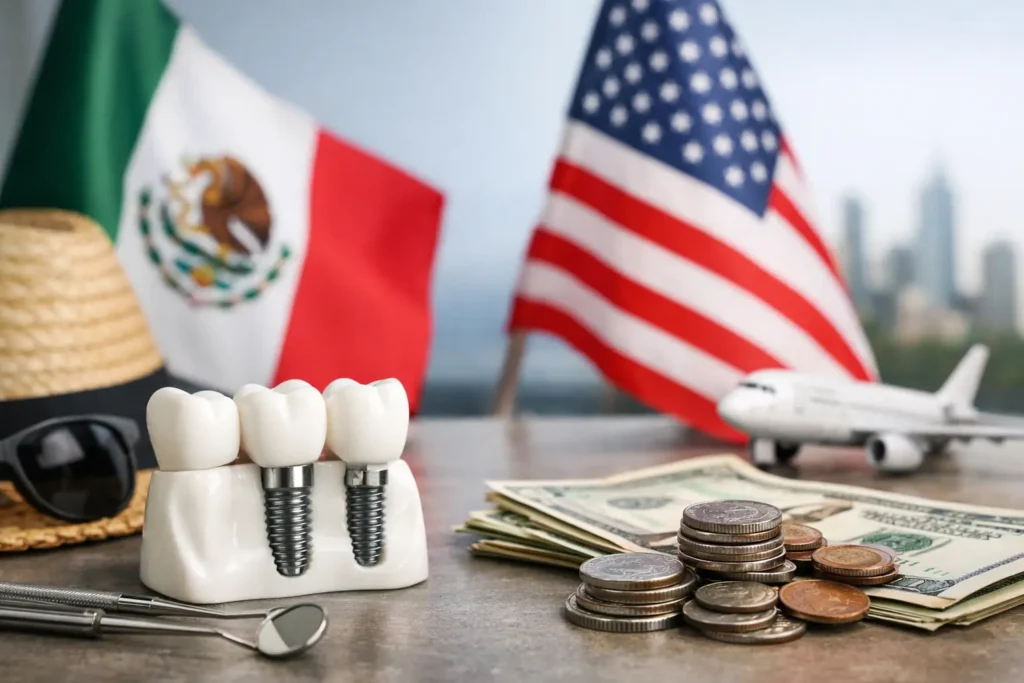
Sticker shock usually happens fast. A patient in the U.S. is told a full-arch implant case could cost as much as a new car, then starts searching mexico implants vs us prices and wonders whether the difference is real, risky, or simply overdue. The short answer is that the savings are real. The better question is why the numbers are so different, and what you should compare before making a decision.
Mexico implants vs US prices: the real gap
For single implants, many U.S. patients see treatment plans that climb into several thousand dollars per implant once the abutment and crown are included. For full-mouth or full-arch treatment, the difference becomes much more dramatic. In the U.S., an All-on-4 or All-on-6 case can reach tens of thousands per arch depending on materials, sedation, extractions, bone reduction, temporaries, and final prosthetics.
In Mexico, those same categories of treatment are often priced far lower, sometimes with savings that reach 50% to 70% compared with U.S. fees. That is the reason so many patients who need multiple implants, implant bridges, or full-mouth rehabilitation look south instead of accepting removable dentures or postponing care.
The key point is this: lower price does not automatically mean lower clinical ambition. Many patients are not traveling to get less dentistry. They are traveling so they can finally afford the treatment they actually want, including fixed teeth, guided surgery, zirconia, and a faster path to function.
Why are implant prices lower in Mexico?
The biggest driver is overhead, not magic and not corner-cutting by default. Dental practices in the U.S. carry higher operating costs across the board. Real estate, staffing, insurance, compliance, administration, and lab expenses all push fees up. Those costs are built into every treatment plan.
Clinics in Mexico can often deliver advanced implant care with a lower cost structure. When a practice is set up specifically for implant and restorative cases, with digital planning and a streamlined workflow for international patients, efficiency improves too. That matters because full-arch cases are not just about the implant hardware. They are about surgery, prosthetic design, imaging, temporaries, follow-up, and coordination.
That said, price differences are not identical from clinic to clinic. One center may quote a very low number that excludes imaging, sedation, temporaries, or the final zirconia prosthesis. Another may present a more complete fee from the start. This is where patients get confused. A cheap headline number is not the same thing as a complete treatment plan.
What should you compare besides the fee?
If you are seriously comparing mexico implants vs us prices, compare scope before price. Ask whether the quote includes the consultation, CBCT review, surgical guide, extractions, bone reduction if needed, same-day temporary fixed teeth, and the final restoration. If it is a full-arch case, ask what prosthetic material is planned and when the final prosthesis is delivered.
You should also ask who is leading the case. Full-mouth rehabilitation is not routine dentistry. It requires surgical judgment, prosthetic planning, bite design, and a clean sequence from diagnostics to final delivery. A lower fee is far more meaningful when treatment is led by an implant-focused doctor using digital planning instead of a patchwork approach.
Technology matters for value too. Guided surgery, intraoral scanning, digital smile planning, and CT-based diagnostics improve precision and reduce guesswork. For the patient, that often means a cleaner fit, a more predictable timeline, and fewer unpleasant surprises after arrival.
The hidden reason many U.S. cases cost more
In the U.S., patients often move through a fragmented system. One office handles extractions, another places implants, a lab fabricates the prosthesis, and a restorative dentist manages the final phase. That can work well, but it can also increase total cost and extend treatment time.
A dedicated implant center built around comprehensive rehabilitation can simplify that process. The planning, surgery, temporary teeth, and prosthetic phases are coordinated under one system. This is one reason some patients feel they are not just saving money in Mexico. They are buying clarity.
For working adults and retirees, time has value. If a clinic can review your CT scan remotely, confirm candidacy before you travel, and organize treatment in fewer visits, that has financial value beyond the fee itself. Days off work, repeated flights, and months in a removable denture all cost something.
Are lower prices worth it if you need full-arch treatment?
For many patients, yes. This is where the economics become hardest to ignore. Someone who needs a single implant might compare local convenience against modest savings and choose to stay close to home. Someone who needs both arches restored, however, may be looking at a price difference big enough to change the entire decision.
That is why full-arch and complex restorative patients are the most likely to travel. They are not shopping casually. They are trying to avoid settling for temporary fixes because of U.S. pricing. If traveling allows them to access fixed teeth, immediate temporaries, and a stronger final prosthetic, the decision becomes less about bargain hunting and more about getting the right solution.
Still, not every patient is an ideal candidate for treatment abroad. If you have serious medical complications, unstable health, or a case that requires extensive grafting over a long timeline, local follow-up may carry extra value. The best clinics will tell you that directly instead of overselling travel to everyone.
What can change the final price in either country?
Implant treatment is never one flat number for every patient. Bone quality, infection, failing teeth, sinus anatomy, periodontal disease, and bite issues all affect planning. Some patients need extractions and immediate implants. Others need bone reduction for full-arch conversion. Others may require a phased plan.
The final prosthetic also matters. A temporary fixed bridge is not the same as a final zirconia restoration. Material choice changes both cost and long-term performance. Zirconia is often preferred for strength, esthetics, and hygiene in many full-arch cases, but it usually costs more than entry-level alternatives.
Sedation, healing timelines, and the need for additional visits can also affect the total. That is why serious clinics ask for records before quoting aggressively. If a provider gives a suspiciously exact number without reviewing a CT scan or diagnostic images, be cautious.
How to judge quality when the price is lower
The safest way to evaluate value is to look at systems, not promises. Ask how cases are planned. Ask whether the clinic uses CBCT imaging, guided surgery, digital impressions, and a structured protocol for immediate load or same-day temporaries. Ask who designs the final bite and prosthetic contours. Ask what happens if additional treatment needs are discovered.
Look for clarity in communication. Strong implant centers explain the timeline, healing, pain control, and travel logistics in plain English. They do not hide behind vague marketing. They should be able to tell you what happens before travel, what happens on surgery day, when temporary teeth are delivered, and when you return for finals.
This is also where specialist leadership matters. A practice built around advanced implant rehabilitation will usually be better equipped for full-arch treatment than a general office that offers implants as one item on a long menu of services.
So, is Mexico the better choice?
Sometimes yes, sometimes no. If you need complex implant treatment, want fixed teeth instead of removable solutions, and are motivated by both quality and cost, Mexico can be the smarter choice by a wide margin. If your main priority is a local office five minutes from home and you only need limited treatment, the convenience of staying in the U.S. may outweigh the savings.
The right comparison is not just Mexico versus the U.S. It is comprehensive value versus fragmented cost. It is guided surgery versus guesswork. It is fixed full-arch rehabilitation versus delaying care because the local estimate is out of reach.
For many patients, that is the moment the numbers stop being abstract. They realize lower fees can open the door to better treatment, not just cheaper treatment. If you are weighing your options, start with a real case review, not a headline price. Send your CT scan today, ask what is included, and make your decision based on precision, materials, experience, and the final outcome you want to live with every day.
A smart implant decision should leave you with more than savings. It should leave you with stable function, confident aesthetics, and a treatment plan you can actually move forward with.