
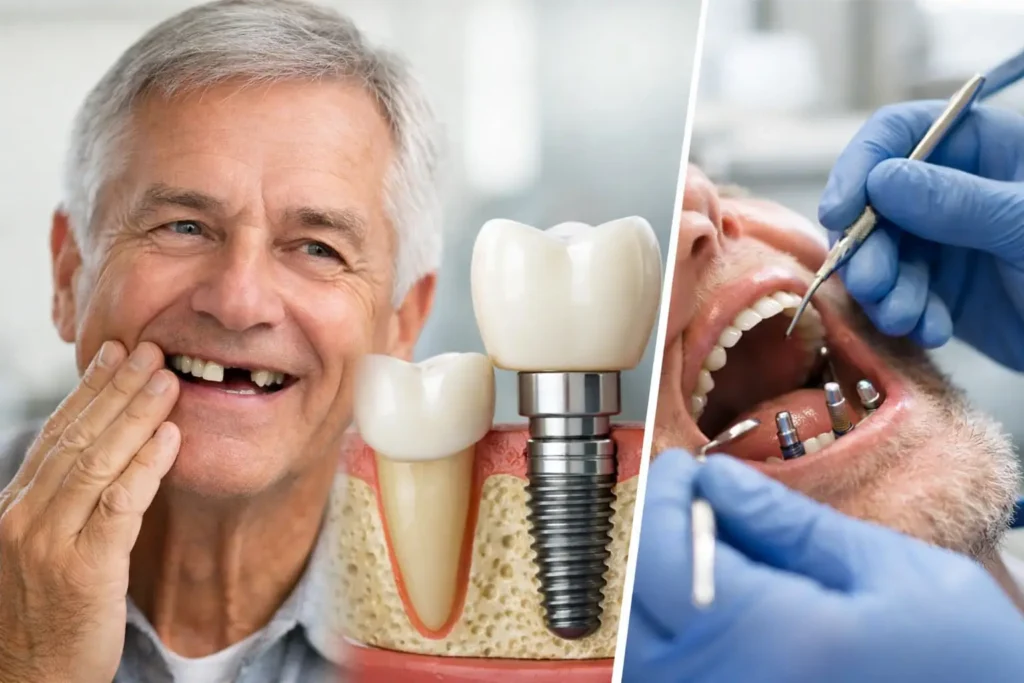
When most or all of your teeth are failing, every delay gets expensive. Chewing gets harder, infections keep coming back, dentures feel like a compromise, and patching one tooth at a time stops making sense. For many patients, dental implants for severe tooth loss are not a cosmetic upgrade. They are the practical next step when you need stability, function, and a clear treatment plan.
This is where the right diagnosis matters. Severe tooth loss is not one problem with one solution. Some patients have multiple missing teeth with enough bone for implants right away. Others have advanced gum disease, loose teeth, broken crowns, failing bridges, or bone loss that changes what is realistic in the short term. The best treatment starts with a full review of your CT scan, bite, bone volume, medical history, and long-term goals.
When dental implants for severe tooth loss make sense
If you are missing many teeth, wearing loose dentures, or trying to save teeth that keep breaking down, implants often become the more predictable option. Instead of rebuilding a collapsing situation one procedure at a time, implant treatment can replace the entire failing system with a fixed foundation.
That does not mean every patient needs the same approach. Some people do well with several individual implants. Many severe cases are better served by full-arch treatment such as All-on-4, All-on-6, or All-on-X, where a small number of strategically placed implants support a full set of fixed teeth. This is often the most efficient path when most teeth in an arch are already missing, infected, mobile, or structurally compromised.
The main advantage is not just appearance. It is function. Fixed implant teeth can improve chewing power, reduce movement in the mouth, and help patients stop planning their day around what they can and cannot eat. For patients who are tired of removable dentures, that shift can be life-changing.
Why severe tooth loss needs a full-mouth strategy
One of the biggest mistakes in complex dental cases is treating each tooth as a separate issue. Severe tooth loss usually affects your bite, jaw support, speech, gum health, and facial balance. If the upper and lower arches are not planned together, you can end up with uneven forces, repeated breakage, or a result that looks acceptable but does not feel right.
A full-mouth strategy looks at the entire system. That includes which teeth can realistically be saved, whether extractions are the smarter financial choice, how much bone is available, and what type of final prosthetic will hold up over time. In advanced cases, digital planning and guided surgery are especially valuable because precision matters more when bone is limited and the margin for error is smaller.
This is also why same-day temporary fixed teeth appeal to so many patients. If you are traveling for care or you simply do not want months without teeth, immediate temporaries can restore appearance and basic function while the implants heal. You leave with fixed teeth, not an empty space or a loose removable appliance in many cases.
Full-arch implants vs dentures
Patients comparing implants to dentures usually already know the emotional difference. What they want to understand is the practical difference.
Traditional dentures rest on the gums. As bone shrinks over time, they often become looser, less stable, and more frustrating to wear. Adhesives, sore spots, food restrictions, and movement during speech are common complaints. Dentures can be the lowest upfront cost, but they often come with ongoing adjustments and lower confidence.
Full-arch implants anchor the restoration to the jaw. That support changes how the teeth feel in daily life. Most patients notice better retention, stronger bite performance, and a more secure fit. There are still trade-offs. Implant treatment requires surgery, healing time, and a larger initial investment. Not every patient is a candidate for every implant design, especially if bone loss is severe. But for many people with advanced tooth loss, fixed implant teeth are the closest option to getting back normal function.
What the treatment process usually looks like
The process should feel organized, not confusing. It typically starts with records and diagnostics. A CT scan is one of the most important tools because it shows bone levels, sinus position, nerve location, and pathology that regular x-rays can miss. In many complex cases, a remote review can tell you whether you are likely a candidate before you travel.
Once the case is planned, treatment may include extractions, implant placement, bone reduction in selected full-arch cases, and delivery of a temporary fixed bridge on the same day or shortly after. That temporary phase is not the final result. It protects the healing process while allowing you to function and smile with confidence.
After healing and integration, the final prosthetic is made. Material choice matters here. Many patients prefer zirconia for its strength, esthetics, and long-term durability. The right final design depends on bite force, arch shape, smile line, hygiene needs, and budget. A specialist-led plan makes these decisions based on function first, not just appearance.
Cost matters, but value matters more
For patients in the U.S. and Canada, the cost of full-mouth implant treatment is often the reason they start looking outside their local market. Severe tooth loss can require extractions, implants, temporaries, final bridges, sedation, imaging, and follow-up care. In the U.S., that total can become overwhelming very quickly.
That is why so many patients consider treatment in Mexico, especially when they can save up to 70% versus U.S. pricing without giving up advanced technology or specialist planning. The key is choosing a clinic that is built for complex implant cases, not just low advertised prices. You want guided surgery, digital workflow, high-quality materials, clear communication, and a team that handles international patient coordination efficiently.
If you are comparing quotes, ask what is actually included. A low number means very little if it excludes temporaries, abutments, imaging, sedation, or the final zirconia prosthesis. The best value is a transparent treatment plan with a defined sequence and realistic expectations.
Are you a candidate if you have bone loss?
Often, yes. Bone loss is common in severe tooth loss, and it does not automatically rule out implants. In fact, many full-arch systems were developed specifically to help patients with reduced bone volume avoid more extensive grafting in selected cases.
It still depends on anatomy. Some patients can be treated with angled implants and guided placement. Others may need preparatory procedures or a different prosthetic design. The only reliable answer comes from a CT-based evaluation. That is why sending your scan early can save time, money, and uncertainty.
Patients also ask about age, diabetes, smoking, and osteoporosis. These factors matter, but they do not always eliminate treatment. They change the planning. A medically informed review helps determine whether the case is straightforward, higher risk, or better handled in stages.
Why specialist-led care changes the outcome
Severe tooth loss is not the place for guesswork. You need a team that handles full-mouth rehabilitation routinely and understands the surgical, restorative, and esthetic sides of the case. Implant positioning, bite design, temporary conversion, and final prosthetic fit all affect the end result.
At Expertos Dentista E Implantes, the advantage for complex cases is not only price. It is the combination of digitally planned treatment, guided surgery, same-day temporary fixed teeth, and specialist oversight designed for patients who want a faster, more predictable path. If you are traveling to Cabo San Lucas for treatment, that efficiency matters. You want fewer surprises, tighter timelines, and a plan that respects both your health and your schedule.
Pain control is another major concern, and it should be addressed directly. Most patients say the anticipation is worse than the actual procedure. With proper planning, anesthesia, and post-op instructions, discomfort is usually manageable. What matters most is knowing what to expect each day after surgery and having a team that communicates clearly.
If your teeth are failing one by one, waiting rarely makes treatment simpler. The right time to ask questions is before another fracture, infection, or failed restoration adds cost and stress. Send your CT scan today, request a free consultation, and get a real answer about whether fixed implant teeth are possible in your case.