
Replacing failing teeth or a removable denture is a major decision, especially when treatment involves travel. For people researching dental implants Los Cabos, the useful question is not simply whether implants are available. It is whether the clinical plan, materials, visit schedule, and follow-up expectations are clear enough to make a confident decision.
At Expertos Dentista e Implantes in Cabo San Lucas, full-arch rehabilitation is planned around the individual patient. That means reviewing the condition of the teeth, gums, jawbone, bite, health history, and imaging before recommending an All-on-4, All-on-6, or more complex implant approach.
What full-arch dental implants replace
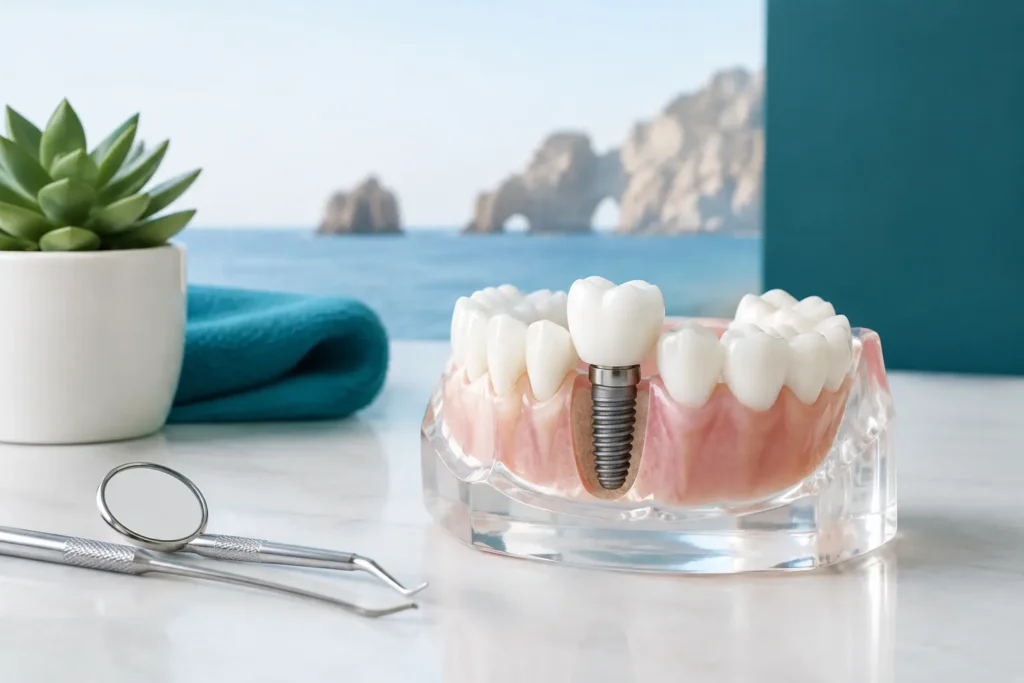
Full-arch dental implants replace an entire upper or lower set of teeth with a fixed prosthesis supported by implants placed in the jaw. Unlike a removable denture, a fixed prosthesis is attached to the implants and removed only by the dental team for professional care when needed.
All-on-4 and All-on-6 are names for full-arch approaches that use four or six implants to support one arch of teeth. The right number is not a marketing choice. It depends on factors such as available bone, bite forces, implant position, the opposing arch, and the overall design of the final restoration.
For some patients with significant bone loss in the upper jaw, conventional implant placement may not provide enough support. After a detailed evaluation, advanced options such as zygomatic, transnasal, or pterygoid implants may be considered. These techniques are not appropriate for everyone, and a CT scan is central to determining whether they may be relevant.
Zirconia final restorations
The final teeth are an important part of the treatment decision. This practice provides full-arch zirconia restorations rather than acrylic or metal full-arch bridges. Zirconia is a strong ceramic material selected for its appearance and durability, but the final design still needs to match the patient’s bite, facial support needs, hygiene access, and implant position.
A well-made final prosthesis is not just a row of white teeth. It must be designed so that the patient can clean around it, speak comfortably, and maintain a stable bite over time.
Dental implants in Cabo San Lucas start with planning
A meaningful implant quote should be tied to a clinical plan, not just a price list. The evaluation may include a CT scan, which is a three-dimensional image used to assess bone volume and anatomical structures. It also includes a review of your current teeth or dentures, periodontal condition, medical information, and treatment priorities.
Digital planning helps the team plan implant positions before surgery. Guided-surgery planning may be used to translate that plan to the clinical procedure. Intraoral scanning creates a detailed digital model of the mouth, while photogrammetry can record implant positions with high precision for full-arch restorative work.
These tools support planning, but they do not replace clinical judgment. A scan that appears promising on its own may not show everything needed to decide on treatment. The clinician must also assess bite relationships, tissue health, restorative space, and practical maintenance needs.
Patients who already have a CT scan should ask the office how to share it securely. If the imaging is recent and clinically suitable, it may help the team begin a preliminary discussion. A personalized written treatment plan should clearly explain proposed options, procedures, materials, fees, anticipated visits, and follow-up considerations.
Understanding All-on-4, All-on-6, and advanced options
All-on-4 may be considered when four strategically placed implants can provide an appropriate foundation for a full arch. In some cases, angling posterior implants helps use available bone while avoiding certain anatomical areas. This does not mean All-on-4 is automatically the least invasive or the right answer for every patient.
All-on-6 uses six implants and may be recommended when anatomy, bite forces, or restorative planning support additional implants. More implants are not inherently better in every situation. The goal is a sound, maintainable foundation based on the patient’s anatomy and treatment needs.
When upper-jaw bone loss is severe, advanced implant solutions may avoid or reduce the need for certain bone-grafting approaches in selected cases. Zygomatic implants anchor in the cheekbone, while pterygoid and transnasal implants use other anatomical areas when clinically appropriate. These are specialized decisions that require careful CT-based evaluation and a detailed conversation about the proposed plan.
Fees for full-arch dental implants in Los Cabos
Published pricing can be a helpful starting point, provided it is read correctly. Fees are quoted per arch, meaning one upper arch or one lower arch, not a complete upper-and-lower treatment.
At the Cabo San Lucas clinic, published guide prices for zirconia full-arch restorations are:
- All-on-4: USD $13,000 to $14,000 per arch
- All-on-6: USD $14,000 to $15,000 per arch
- Zygomatic implant treatment with an All-on-4 approach: USD $16,000 per arch
- Single implant package: starting at USD $1,899, including the implant, Ti-base, and zirconia crown
These figures are indicative and require an individual written quote. A treatment plan may vary based on the need for extractions, periodontal treatment, bone conditions, the number and type of implants, restorative requirements, and whether one or both arches are being treated.
When comparing quotes, ask what materials are planned for the final teeth, whether the fee is per arch, what diagnostic and digital planning steps are included, and how provisional and final restorations are handled. A lower headline number is difficult to evaluate if the scope of care is not clearly defined.
What the two-trip process can look like
Full-arch treatment normally involves two trips to Cabo San Lucas. The first visit commonly focuses on clinical assessment, surgery when indicated, and provisional teeth when clinically appropriate. Temporary fixed teeth are provisional, not the final zirconia prosthesis. Whether they can be provided depends on surgical stability, tissue conditions, bite considerations, and the individual treatment plan.
Healing occurs between visits, with timing determined by the case. The final zirconia prosthesis follows healing and is created after the implants and surrounding tissues have had appropriate time to stabilize. The second visit involves the restorative stages needed to deliver and adjust the final teeth.
Traveling patients from Greater Los Angeles, Seattle, Metro Vancouver, Calgary, and elsewhere should avoid scheduling return flights too tightly around clinical appointments. Build flexibility into the itinerary, bring a current medication list, and share relevant medical information before traveling. If you wear an existing denture, bring it to the appointment unless the team advises otherwise.
Maintenance matters after treatment
Implant-supported teeth require regular care. Home cleaning instructions vary with the design of the restoration, but patients typically need to clean around the prosthesis and gumline carefully using the tools recommended by their dental team. Routine professional examinations are also important to assess the tissues, bite, restoration, and implant area.
A fixed zirconia bridge can feel very different from a removable denture, but it is not maintenance-free. Grinding, changes in bite, hygiene challenges, and general health changes can affect long-term care needs. A good plan includes guidance on follow-up, whether you live near Cabo San Lucas or return home to the United States or Canada.
If you are considering full-arch dental implants, request a personalized clinical evaluation and written treatment plan. Sending available CT imaging securely and asking direct questions about your options can turn a broad online search into a clearer, more practical next step.