
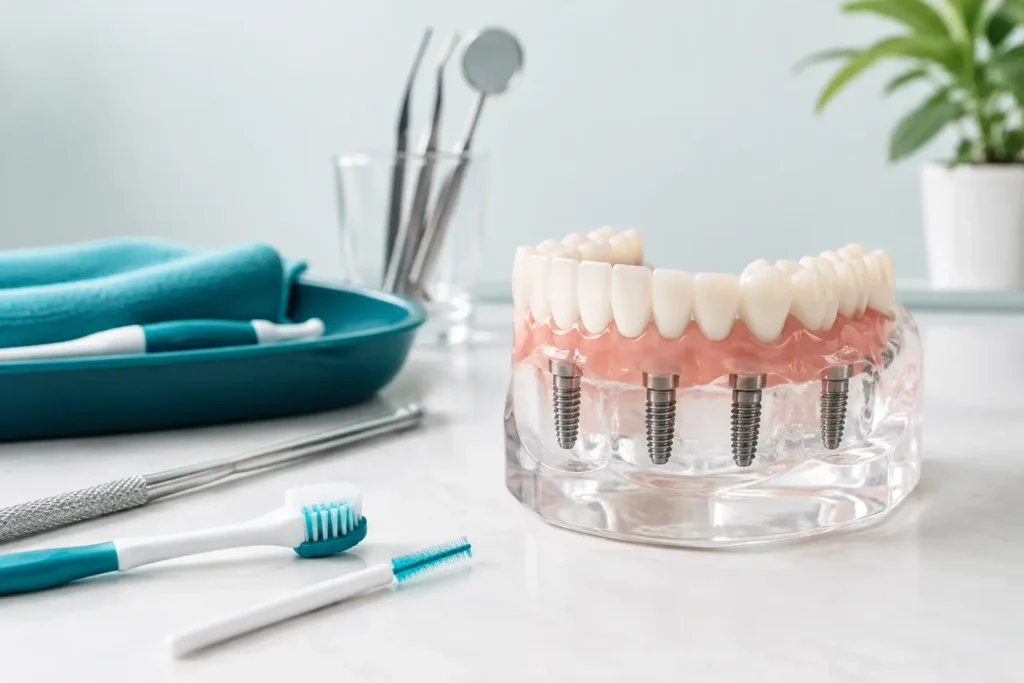
A full-arch restoration can change how you eat, speak, and smile, but the long-term value of treatment depends on what happens after placement. Implant maintenance after full arch restoration in Cabo San Lucas is not complicated, but it is specific: your bridge, implants, gums, bite, and home-care routine all need regular attention.
Whether your treatment involves All-on-4, All-on-6, or another individualized full-arch approach, fixed teeth are not maintenance-free teeth. The final zirconia restoration is designed for strength and function, yet the tissues around the implants still need careful cleaning and professional monitoring.
What You Are Maintaining After Full-Arch Treatment
A full-arch restoration replaces all teeth in an upper or lower jaw with a fixed bridge supported by dental implants. The implants are titanium posts placed in the jawbone. The bridge is the visible set of teeth, often made from zirconia after the healing stage.
These are separate parts of one system. The zirconia teeth need cleaning to control plaque and staining. The gum tissue around the implants needs attention because inflammation can develop there, just as it can around natural teeth. The bite also needs periodic review. If a bridge receives uneven pressure from clenching, grinding, or changes in the opposing teeth, adjustments may be appropriate.
A provisional fixed bridge, when clinically appropriate, deserves particular care. It is a temporary restoration used during part of the treatment process, not the final prosthesis. Your clinical team will explain its dietary limits, cleaning method, and when the final zirconia bridge may be planned after healing.
Daily Implant Maintenance After Full Arch Restoration
Daily cleaning is the foundation of maintenance. Food and bacterial plaque can collect where the bridge meets the gums, especially beneath the arch and near the implant sites. A bridge can look clean from the front while debris remains in areas that are harder to see.
Brush at least twice daily with a soft toothbrush and a nonabrasive toothpaste. Focus on the gumline and the outer, inner, and chewing surfaces of the bridge. An electric toothbrush can be useful for many patients, although technique matters more than the tool itself. Avoid aggressively scrubbing the gumline or using highly abrasive whitening pastes unless your dentist has recommended them.
Cleaning beneath the bridge is equally important. Depending on the shape of your restoration and the space beneath it, your team may recommend a water flosser, implant floss, floss threaders, interdental brushes, or a combination of these. A water flosser can help flush food particles from under the bridge, but it should not automatically replace the mechanical cleaning method your clinician has shown you.
The best routine is the one that reaches the areas you can actually clean consistently. During your final delivery visit, ask the team to demonstrate the technique with your own bridge in place. It is reasonable to ask where plaque tends to collect, which brush size fits safely, and whether an antimicrobial rinse is appropriate for your situation.
Protecting Your Zirconia Full-Arch Bridge
Zirconia is a strong, tooth-colored ceramic commonly used for final full-arch restorations. Strength does not mean it should be tested with ice, hard candy, pens, or packaging. Avoid using the bridge as a tool, and be cautious with very hard foods, particularly if your team has identified bite forces or grinding as a concern.
Some patients benefit from a night guard to help protect the restoration from clenching or grinding. This is not necessary for every patient, and the decision depends on your bite, habits, and clinical findings. If a guard is recommended, wear it as instructed and bring it to follow-up visits so fit can be checked.
Call your dental team if you notice a new chip, rough edge, change in how your teeth meet, persistent food trapping, or a bridge that feels different when you bite. Do not try to adjust the bridge or tighten anything yourself. A small concern is often easier to assess before it becomes a larger repair.
Professional Follow-Up Matters
Home care cannot replace professional maintenance. Follow-up appointments allow the clinical team to examine the gums around the implants, check for inflammation, assess your bite, and evaluate the bridge and supporting components. When indicated, the bridge may be removed by the dental team for a more complete inspection and cleaning. Whether that is needed, and how often, depends on the design of the restoration and your individual risk factors.
Professional cleaning around implants requires appropriate instruments and technique. The goal is to clean thoroughly without damaging the implant surface or restoration. Your hygiene provider should know that you have implant-supported full-arch teeth and understand the design of your bridge.
Many patients are advised to schedule regular maintenance visits, often every three to six months at first. The right interval depends on gum health, cleaning ability, smoking or vaping history, diabetes control, grinding, and previous periodontal disease. Your interval should be based on a clinical evaluation rather than a one-size-fits-all calendar.
Planning Follow-Up When You Travel to Los Cabos
Full-arch treatment at Expertos Dentista e Implantes normally involves two trips. The first stage may include implant placement and a provisional fixed restoration when clinical conditions allow. The final zirconia prosthesis follows healing, with timing determined by your individual case.
For patients traveling from California, Washington, Metro Vancouver, Calgary, or elsewhere in the United States and Canada, follow-up planning should be discussed before treatment begins. Ask which appointments are expected in Cabo San Lucas, what records you should take home, and how the team prefers to receive questions or photos if a concern develops between visits.
It is also wise to identify a local dentist or hygienist who can provide routine care near home. Your Cabo San Lucas team can explain what information may be helpful to share, such as your treatment summary, implant details, restoration type, and recommended hygiene approach. Not every local office has the same experience with full-arch implant bridges, so arrange this relationship before you need urgent help.
If you are planning flights, allow flexibility around clinical appointments. Travel timing should follow your treatment plan, not the other way around. Avoid scheduling major work commitments or a tightly planned vacation immediately around treatment visits until your clinician has explained the expected schedule for your case.
Questions to Ask Before Your Final Restoration
A written treatment plan should make maintenance expectations clear, not leave them as an afterthought. Before final delivery, ask how your bridge is retained, how to clean beneath it, which products are recommended, and what symptoms should prompt a call. Ask how often the team expects to see you and whether professional bridge removal may be part of future maintenance.
It is also helpful to clarify what follow-up is included in your written quote and what future maintenance or repairs may cost. Published full-arch pricing at the practice is provided per arch and requires an individualized written quote. Maintenance needs, additional appointments, and any repairs should be discussed transparently as part of your personal plan rather than assumed.
When to Contact Your Dental Team
Some adjustment is normal as you become familiar with a new full arch, but certain changes should not wait for your next routine visit. Contact your provider promptly for swelling, bleeding that persists, pain, a loose-feeling bridge, a crack or chip, a sudden bite change, drainage, or difficulty cleaning an area that was previously accessible.
These symptoms do not automatically mean that an implant has failed. They do mean the situation deserves professional assessment. Early communication gives your clinical team the best opportunity to determine what is happening and advise the next step.
A well-planned full-arch restoration should come with a clear plan for care after treatment, not just a plan for placement. If you are considering All-on-4, All-on-6, or another full-arch option in Cabo San Lucas, request a personalized treatment plan and clinical evaluation. Bring your questions, and ask how the proposed bridge, travel schedule, and maintenance routine would fit your individual needs.