
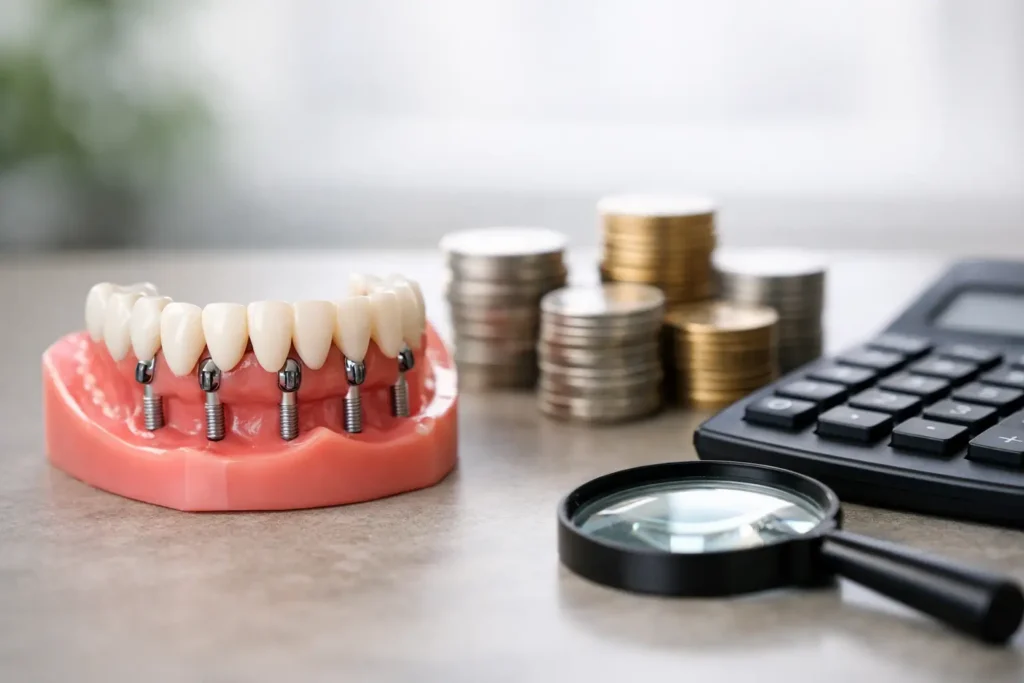
Sticker shock usually happens fast with full-mouth implants. A patient is told they need fixed teeth, starts searching all on 6 cost, and suddenly sees numbers that range from manageable to overwhelming. That gap is not random. It comes down to what is included, the complexity of your case, the materials used, and who is planning and placing your treatment.
If you are comparing options in the U.S., Canada, and Mexico, the right question is not just “What does All-on-6 cost?” It is “What am I actually paying for, and what result should I expect?” That is where smart decisions get made.
What all on 6 cost usually includes
All-on-6 is a full-arch implant solution that uses six dental implants to support a fixed bridge. For the right patient, it offers more stability, better load distribution, and a strong long-term foundation for a full set of teeth. But cost can vary because not every quote covers the same treatment.
A true full-arch price may include the consultation, digital imaging, surgical planning, extractions, bone reduction when needed, implant placement, same-day temporary fixed teeth, follow-up visits, and the final prosthesis. In other cases, the advertised number covers only part of the process, and patients do not realize that sedation, temporaries, or the final zirconia bridge are billed separately.
That is why a low quote can be misleading. It may look attractive at first, but once the missing pieces are added, the total can climb quickly.
What changes the all on 6 cost most
The condition of your mouth
No two full-mouth cases are identical. Some patients still have a few restorable teeth. Others have advanced bone loss, gum disease, infection, failing bridges, or long-term denture wear. Those details matter because they affect surgical complexity.
If you need multiple extractions, infection control, alveoloplasty, or more advanced preparation before implants can be placed, your cost will be different from someone with healthier bone and simpler anatomy. This is also why a CT scan matters so much. A panoramic image can help, but a CT scan gives the surgical team the detail needed to evaluate bone volume, sinus position, nerve location, and whether immediate loading is realistic.
The type of final teeth
One of the biggest cost differences comes from the final prosthesis. Temporary fixed teeth are not the same as a final zirconia bridge. Temporaries are designed to help you function and smile during healing. The final bridge is where long-term strength, bite precision, esthetics, and material quality become much more important.
Acrylic hybrids usually cost less upfront. Zirconia costs more, but many patients choose it for durability, stain resistance, and a more premium finish. If you are comparing quotes, ask what the final teeth are made of. That answer alone can explain a major price difference.
The surgical approach
Digitally planned and guided surgery often costs more than a basic freehand approach, but it can improve precision, efficiency, and predictability. For full-arch treatment, that matters. Implant positioning affects not only healing but also the strength and esthetics of the final bridge.
When treatment is led by an implant-focused doctor using digital planning, guided surgery, and a clear restorative strategy, you are paying for more than hardware. You are paying for a process designed to reduce surprises.
Sedation, lab work, and aftercare
Some clinics bundle sedation and lab fees into the quote. Others separate them. The same is true for follow-up visits, temporary relines, and repair contingencies. These line items may sound secondary, but they can change the real total by thousands.
Patients traveling for care should also factor in logistics. Even if treatment abroad is significantly more affordable, you still need to account for flights, hotel stays, and return visits if your case requires a phased approach.
U.S. vs Mexico: why the numbers can be far apart
In the United States, full-arch implant treatment often reaches a level that pushes many patients into delay, financing stress, or removable alternatives they never wanted in the first place. For that reason, many people looking up all on 6 cost are not simply shopping. They are trying to find a realistic path to fixed teeth.
Mexico often changes that equation. The savings are not usually because corners are being cut. In reputable implant centers, the difference is driven by overhead, operating costs, and the economics of delivering specialty care outside the U.S. system. Patients can often save up to 70 percent versus U.S. fees while still receiving advanced diagnostics, guided surgery, immediate temporary fixed teeth, and high-quality final restorations.
That said, price alone should never be the deciding factor. There is a big difference between value and cheap dentistry. If a clinic cannot clearly explain who plans the case, what technology is used, what materials are included, and what happens if adjustments are needed, the lower number may not be the better deal.
What a fair price should feel like
A fair price is transparent. You should know whether your quote includes extractions, six implants, temporary fixed teeth, and the final prosthesis. You should know the timeline, whether bone grafting is anticipated, and whether your anatomy supports same-day teeth.
You should also know who is responsible for your treatment from start to finish. Full-mouth rehabilitation is not a simple commodity. It is a coordinated surgical and restorative case. The strongest outcomes come from specialist-led planning, digital precision, and a team that understands bite function, facial support, and long-term maintenance.
If a quote feels vague, ask harder questions. If a clinic answers clearly and confidently, that usually tells you something important.
When lower all on 6 cost is not actually better
There are cases where a lower fee becomes more expensive later. Poor implant positioning can compromise the bridge. Weak temporary design can create repeated fractures. A low-grade final material may chip, wear, or stain faster than expected. Inadequate diagnostics can also lead to treatment changes after surgery begins.
This does not mean the highest quote is automatically best. It means you should compare based on scope, materials, planning, and experience – not just the first number on the page.
Patients who do best with full-arch treatment usually think beyond the surgery date. They want fixed teeth that look natural, feel stable, and hold up under daily life. That mindset leads to better decisions.
How to compare quotes without getting lost
Start by asking each clinic the same core questions. Does the price include six implants per arch or “up to” six? Are same-day temporary teeth included? What is the final bridge material? Is a CT scan review part of the consultation? Is surgery guided? Are sedation and follow-up visits included?
Then look at the treatment philosophy. Some clinics are built for high volume and fast sales. Others are built for full-case planning and controlled execution. If you are investing in a permanent solution, the second model is usually where confidence comes from.
For cross-border patients, remote case review is especially helpful. Sending your CT scan before travel can clarify candidacy, identify likely extra costs, and reduce uncertainty. That makes budgeting easier and protects you from traveling for a plan that changes on arrival.
Why many patients still choose All-on-6
All-on-4 gets more attention, but All-on-6 can be the better choice for some patients. With six implants, the arch may have improved support and force distribution, especially in cases where anatomy allows it and bite demands are higher. That can be attractive to patients who want a stronger foundation for a long-span fixed bridge.
The trade-off is simple. More implants can increase the surgical fee and sometimes the complexity, but they may also improve stability and prosthetic support. Whether that is worth it depends on your bone, your goals, and your doctor’s treatment plan.
At Expertos Dentista E Implantes, that decision starts with digital evaluation, not guesswork. If you are comparing options, ask for a free consultation and send your CT scan today. The fastest way to understand your real cost is to have your anatomy reviewed by an implant specialist.
Fixed teeth should feel like a solution, not another financial trap. When the plan is clear, the materials are strong, and the team knows how to execute full-arch cases properly, the price starts making sense.