
A crown that looks good on the day it is placed but chips, stains, or feels uncomfortable later is not a good value. For patients considering implant treatment in Cabo San Lucas, the question, are zirconia crowns worth it, usually comes down to more than material alone. It involves bite forces, appearance, the number of teeth being replaced, implant position, hygiene habits, and the quality of planning behind the restoration.
Zirconia is widely used for single crowns and final full-arch implant restorations because it is strong, tooth-colored, and designed to hold up well under chewing forces. It can be an excellent option, but it is not an automatic answer for every person or every stage of treatment. A clinical evaluation is the right place to determine whether zirconia fits your needs and treatment goals.
What a zirconia crown is
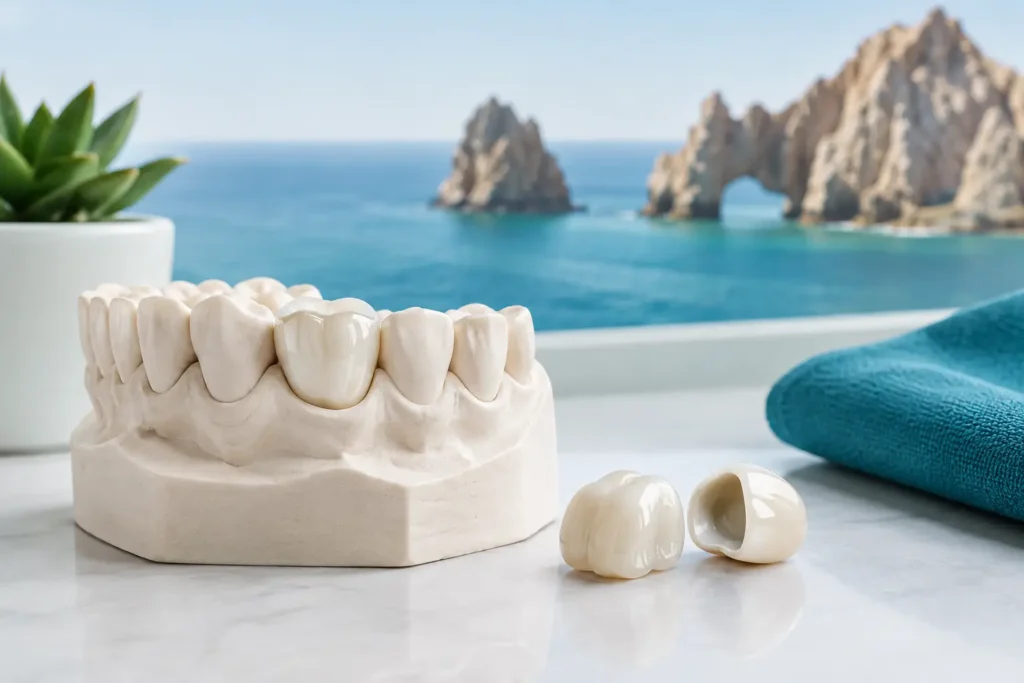
A dental crown is a custom covering that restores a damaged tooth or attaches to a dental implant. Zirconia is a high-strength ceramic material. Unlike a crown with a visible metal substructure, zirconia can be made in natural-looking shades without dark metal showing near the gumline.
For a single implant, a zirconia crown is typically connected to the implant through a Ti-base, which is a titanium connector. At Expertos Dentista e Implantes, the single implant package starts at USD 1,899 and includes the implant, Ti-base, and zirconia crown. Whether that package is appropriate depends on the condition of the treatment site, bone availability, bite, and other findings from the evaluation.
For full-arch treatment, zirconia is used differently. Rather than placing one crown at a time, the clinician designs a fixed zirconia prosthesis that replaces the visible teeth across an upper or lower arch. This prosthesis is supported by implants placed strategically in the jaw.
Are zirconia crowns worth it for full-arch implants?
For many people replacing removable dentures or failing teeth, a final zirconia full-arch restoration can be worth the investment because it is intended to provide a stable, fixed solution with a refined appearance and durable ceramic surface. It may be particularly appealing to patients who want to avoid the wear, staining, and material limitations they associate with some removable or temporary options.
Still, the value is not simply in choosing zirconia. The restoration must be planned around the implants, facial support, bite, speech, available restorative space, and ability to clean around the prosthesis. A beautiful material cannot compensate for poor fit, inaccurate records, or an implant plan that does not suit the anatomy.
At the Cabo San Lucas clinic, CT-based planning, digital scans, guided-surgery planning, and photogrammetry may be used when appropriate. Photogrammetry is a digital method for recording the precise position of implants. These records help the restorative team design a final bridge that relates correctly to the implants and the patient’s bite.
Strength is a major advantage, not the only advantage
Zirconia is known for its resistance to fracture and wear. That matters for back teeth and for full arches, where the restoration must withstand repeated chewing forces across a broad area. It can also be polished to a smooth surface that is generally easier to keep looking clean than materials that readily absorb stains.
However, strength should be balanced with design. A patient who clenches or grinds may need additional bite protection, monitoring, or adjustments. The opposing teeth also matter. In some cases, the clinician may modify the restoration design to reduce unnecessary stress on the implants, prosthesis, or natural teeth in the opposite arch.
Appearance depends on planning and shade selection
Zirconia can create a natural-looking result, but “natural” means different things to different patients. Some want a bright, uniform smile. Others prefer subtle variation in color, texture, and translucency. Discussing those preferences before the final prosthesis is made is essential.
In full-arch treatment, the shape and position of the teeth can affect more than appearance. They influence speech, lip support, and how the teeth meet when you close your mouth. This is one reason a provisional phase can be useful. A provisional fixed bridge, when clinically appropriate, is temporary and helps the team assess function and aesthetics while healing occurs. It is not the final zirconia prosthesis.
Zirconia versus temporary full-arch teeth
Patients sometimes compare zirconia directly with the temporary teeth placed after implant surgery. They serve different purposes.
A provisional restoration is designed for the healing phase. It may be fixed when clinical conditions allow, but it is not promised for every case. The final zirconia prosthesis follows healing, after the clinician confirms that the implants and surrounding tissues are ready for the next stage.
This distinction matters when comparing prices and timelines. A full-arch treatment plan is not just a purchase of a bridge. It is a staged clinical process that can include diagnosis, imaging, implant placement, provisional planning where suitable, healing, final records, fabrication, delivery, and follow-up. Full-arch care normally involves two trips, although the number and timing of visits depend on your individual case.
When zirconia may not be the right starting point
Zirconia is often used for final restorations, but it may not be the immediate choice if the clinical foundation is not ready. Active gum disease, unresolved infection, insufficient bone, an unstable bite, or medical factors may require further assessment or treatment first. These issues do not automatically rule out implant care, but they can change the sequence, technique, and materials considered.
Patients with severe upper-jaw bone loss may need a more specialized implant approach, such as zygomatic, transnasal, or pterygoid implants. These options are selected only after a detailed review of the CT scan and oral condition. The final restoration may still be zirconia, but the surgical plan is more complex than a standard case.
A good consultation should make this clear rather than treating every full arch as the same procedure.
Cost: evaluating zirconia value in Los Cabos
The right question is not only, “What does zirconia cost?” It is, “What does the written treatment plan include, and what is being proposed for my specific condition?” A transparent plan should identify the recommended option, materials, clinical stages, fees, expected visits, and follow-up considerations.
At Expertos Dentista e Implantes, published guides for full-arch zirconia restorations are USD 13,000 to USD 14,000 per arch for All-on-4 and USD 14,000 to USD 15,000 per arch for All-on-6. Zygomatic implant treatment with an All-on-4 approach is published at USD 16,000 per arch. These figures are per arch, not for both upper and lower arches, and they are indicative only. A personalized written quote is required after clinical evaluation.
All-on-4 and All-on-6 refer to the number of implants supporting a full arch. More implants are not automatically better for every patient. The appropriate design depends on bone quality, anatomy, bite forces, restorative space, and the clinician’s assessment. The purpose is to create a stable, maintainable foundation for the final teeth.
For travelers from California, Washington, Metro Vancouver, Calgary, and elsewhere in the United States and Canada, value also includes travel planning. Before booking, ask how to securely share your CT scan, whether new imaging is needed, how long each appointment phase may require, and what follow-up should look like once you return home. Avoid scheduling a return flight so tightly that there is no flexibility for a necessary check or adjustment.
Maintenance protects the investment
A zirconia restoration is not maintenance-free. Daily cleaning around the gumline and under a full-arch bridge is essential. Your dental team may recommend specialized flossing aids, an oral irrigator, or other tools based on the prosthesis design. Regular professional maintenance helps monitor the gums, implant components, bite, and the condition of the restoration.
Grinding protection may also be recommended for some patients. If a bridge feels different when biting, if a screw-access area feels rough, or if you notice any change in comfort, contact your treating team promptly rather than trying to manage it on your own.
Questions to ask before choosing zirconia
Ask whether zirconia is being recommended for a single crown, a final full arch, or both. Confirm what temporary restoration is planned, if any, and understand that a temporary fixed bridge is provisional and depends on clinical conditions. You should also ask how the bite will be evaluated, how the final bridge will be cleaned and maintained, and what records will guide its fabrication.
For patients considering treatment in Los Cabos, a secure CT review and individualized evaluation can clarify whether zirconia is appropriate for your situation, what treatment stages may be needed, and what your written quote covers. Request a personalized treatment plan before making travel decisions, so you can compare options with clear expectations rather than assumptions.