
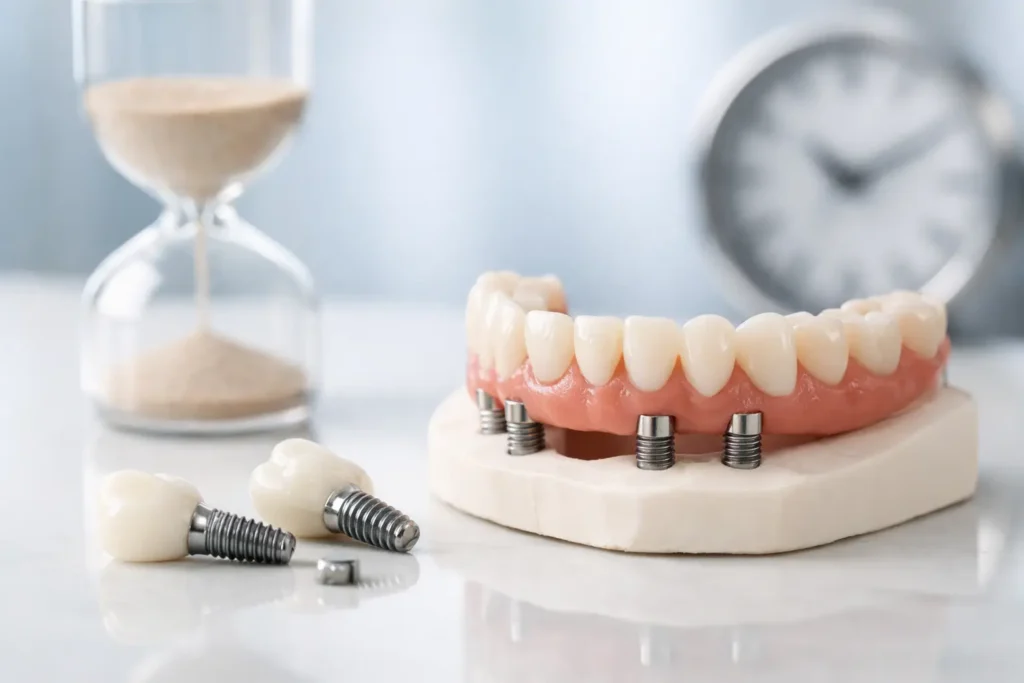
When patients ask how long do All on 4 last, they usually mean one thing – is this a real long-term solution, or am I going to be doing this again in a few years? That is the right question to ask. Full-arch implants are designed to be durable, but longevity depends on two different parts of the treatment: the implants in the bone and the fixed teeth attached on top.
In most cases, the implants themselves can last decades and often 20 years or more. The prosthetic bridge – the visible set of teeth – usually has a shorter lifespan because it takes the daily wear of chewing, temperature changes, grinding, and bite pressure. So the honest answer is not a single number. All-on-4 can last a very long time, but only when the case is planned correctly, the materials are strong, and the patient maintains the result.
How long do All on 4 last in real life?
A well-executed All-on-4 case is built for long-term function. The titanium implants placed in the jaw are not considered temporary. Once they integrate properly with the bone, they can remain stable for many years. Many patients keep their implants for decades.
The upper part of the restoration is different. A temporary fixed bridge placed on the same day is meant to get you through healing and let you leave with teeth. That temporary is not the final lifespan benchmark. The final bridge, especially when made from stronger materials such as zirconia, is the one that matters when patients talk about long-term value.
A high-quality final prosthesis may last 10 to 15 years or longer, and in some cases more, before a replacement or major refurbishment is needed. Some last less if the bite is unstable, if hygiene is poor, or if heavy grinding causes repeated stress. Others last longer because the case was digitally planned, the bone support is solid, and the patient follows maintenance instructions closely.
What affects how long All on 4 lasts?
The biggest factor is treatment quality from day one. Implant angle, bone density, bite design, and prosthetic fit all matter. If those details are off, the restoration may still look good at first, but the long-term performance is weaker. This is why specialist-led planning and guided surgery are not cosmetic extras. They directly affect how long your case holds up.
Material choice also matters. A temporary acrylic bridge is useful during healing, but it wears faster and is more likely to chip or fracture over time. A final zirconia bridge is stronger, more stain-resistant, and generally a better long-term option for full-arch restoration. That does not mean zirconia is indestructible. It means it usually performs better under daily function when the design is correct.
Your own habits are another major variable. Smoking, uncontrolled diabetes, teeth grinding, poor home care, and skipping maintenance visits can shorten the lifespan of both implants and prosthetics. Even a strong implant system can fail earlier if inflammation develops around the implants or if excess force keeps hitting the bridge every day.
Then there is anatomy. Some patients arrive with severe bone loss, old infections, or years of collapsing bite problems. These cases can still be treated successfully, but they require careful planning. A patient with stable bone and good healing potential usually has a more predictable long-term outlook than someone with active periodontal issues or major parafunctional habits.
Implants vs bridge: they do not age the same way
This is where many patients get confused. If someone says their All-on-4 lasted 12 years, that may mean the implants are still fine but the bridge was replaced. The foundation and the teeth are not the same thing.
The implants are medical-grade titanium fixtures integrated into the jawbone. Their job is support. If they stay healthy and stable, they may not need replacement at all.
The bridge is the working surface. It handles chewing, pressure, wear, and esthetics. Over time, it may need polishing, tightening, repair, relining, adjustment, or full replacement depending on material and use. That is normal and does not automatically mean the treatment failed.
A realistic expectation is this: the implant portion should be thought of as long-term infrastructure, while the prosthetic portion is a high-value restoration that may eventually need maintenance or renewal.
Signs your All-on-4 may need repair or replacement
Longevity is not just about years on a calendar. It is also about how the restoration performs. If the bridge starts to feel loose, if there is recurring bad odor, if food traps heavily underneath, or if you notice chips, cracks, or changes in your bite, the case needs evaluation.
Discomfort when chewing is another sign not to ignore. So is gum inflammation around the implants. Sometimes the solution is simple, such as tightening screws or adjusting the bite. In other cases, the prosthesis has reached the end of its service life and should be rebuilt before it causes bigger problems.
This is why maintenance matters even for patients who feel fine. Small issues are easier and less expensive to correct than major failures caused by delay.
How to make All on 4 last longer
The best way to protect your investment is to treat it like a precision restoration, not like natural teeth that can be ignored until something hurts. Daily cleaning is essential because plaque can still collect around implants and under the bridge. You also need professional follow-up so the prosthesis, screws, bite, and tissue health can be checked regularly.
If you grind your teeth at night, wear protection if your doctor recommends it. If you smoke, understand that smoking increases risk to healing and long-term implant health. If you have a medical condition such as diabetes, keeping it well controlled improves outcomes.
Equally important is choosing the right final bridge. Patients focused only on the cheapest option often end up replacing restorations sooner. A better material and a better design usually cost more upfront, but they tend to perform better over time. That is often where long-term savings actually happen.
Does All-on-4 last as long as natural teeth?
Not exactly, and that is the wrong comparison for many patients. Most people considering All-on-4 are not choosing between perfect natural teeth and implants. They are choosing between a failing mouth and a fixed full-arch solution that restores function, appearance, and confidence.
If your current situation involves loose teeth, repeated infections, broken dental work, or dentures that move when you speak, then the relevant question is whether All-on-4 offers a durable upgrade. In the right hands, the answer is yes. It is one of the most effective ways to move from instability to a fixed, predictable result.
That said, durability still depends on execution. Not every All-on-4 case is planned the same way. Diagnostic imaging, digital bite analysis, prosthetic design, and guided implant placement all improve precision. A rushed, low-detail approach may save money at the start and cost much more later.
Is it worth doing All-on-4 if the bridge may need replacement later?
For most patients, yes. Replacing or refurbishing a bridge after many years is very different from starting over with extractions, bone loss, repeated dentures, or ongoing patchwork dentistry. If the implants remain healthy, updating the prosthetic portion is usually far more manageable than rebuilding the whole case from scratch.
This is one reason full-arch implant treatment can offer strong long-term value, especially for patients comparing the cost of repeated dental failure in the U.S. with a well-planned solution abroad. At clinics using digital planning, guided surgery, and stronger final materials, the goal is not just to get you teeth fast. It is to give you a result that keeps performing.
At Expertos Dentista E Implantes, this is exactly why remote case review and CT scan evaluation matter before treatment begins. The better the planning, the better the odds that your All-on-4 will last the way it should.
If you are weighing this treatment seriously, think beyond the sales pitch and ask sharper questions. What material will the final bridge be made from? Is the surgery guided? Who designs the bite? What maintenance will be needed? How will grinding, bone loss, or medical history affect lifespan? Those answers matter more than any one-size-fits-all promise.
A strong All-on-4 result is not about hoping it lasts forever. It is about building it correctly, maintaining it consistently, and choosing a team that plans for the long term from the very first scan.