
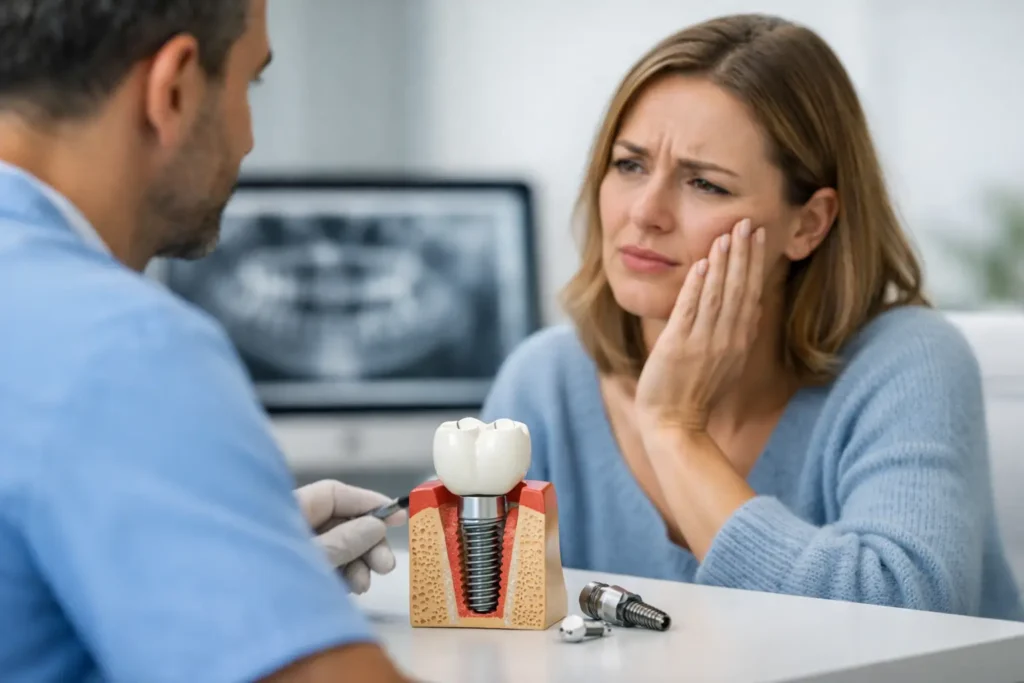
Most patients asking how painful is implant surgery are not worried about the implant itself – they are worried about losing control, feeling sharp pain, or facing a rough recovery. That fear is understandable. The good news is that modern implant surgery is usually far easier than people expect, especially when it is digitally planned, guided, and managed by an implant-focused team.
In plain terms, implant surgery is typically more pressure than pain during the procedure, and more soreness than severe pain afterward. For many patients, the anticipation is worse than the actual experience.
How painful is implant surgery during the procedure?
During implant placement, the area is fully numbed with local anesthesia. If the case is more complex, sedation options may also be used depending on the treatment plan and the patient’s needs. Once the anesthesia is working, you should not feel cutting or drilling pain. You may feel pressure, vibration, movement, and the sound of the instruments, but that is very different from pain.
This is one reason experienced implant patients often say the procedure felt easier than a tooth extraction. A damaged tooth with infection or inflammation can be more uncomfortable to remove than a clean, well-planned implant site is to treat.
That said, not every case feels identical. A single implant placed in healthy bone is usually straightforward. A full-arch case with multiple extractions, bone reduction, or same-day temporary teeth is a bigger procedure. Even then, the goal is the same – keep you comfortable during surgery and in control after it.
What does implant surgery feel like after the numbness wears off?
This is where most people really want the truth. After the anesthesia fades, you can expect tenderness, swelling, and a bruised feeling in the area. Pain is usually described as manageable, not extreme. Many patients compare it to the soreness after a difficult extraction or to the ache that follows oral surgery in general.
The first 24 to 72 hours are usually the most noticeable. That is when swelling peaks and when you are most likely to feel throbbing or pressure. By the end of the first week, many patients feel significantly better. Full healing takes longer, of course, because the implant needs time to integrate with the bone, but the intense part of recovery is generally short.
Pain also depends on how much treatment is done at once. If you are receiving one implant, discomfort is often limited and localized. If you are having full-mouth rehabilitation, several extractions, or All-on-4 style treatment, recovery can feel more demanding for a few days. The trade-off is efficiency – more treatment completed in one phase, fewer separate surgeries, and faster progress toward fixed teeth.
Why some implant cases hurt less than expected
The biggest factor is planning. Implant surgery should not feel improvised. When a clinic uses 3D imaging, digital treatment planning, and guided surgery, the placement is more precise and less traumatic to surrounding tissues. Less trauma generally means less swelling and less post-op pain.
Technique matters just as much. Gentle tissue handling, accurate implant positioning, and a clean surgical protocol all support a smoother recovery. This is why specialist-led care makes a difference. Patients often focus on price first, but the real value is in reducing complications, shortening recovery, and improving the predictability of the result.
For patients traveling for treatment, this matters even more. If you are coming from the U.S. or Canada, you want a process that is efficient, clear, and controlled from the start. A remote CT scan review, a defined surgical plan, and a team experienced in full-arch treatment can remove a lot of uncertainty before you ever board a flight.
How painful is implant surgery compared to extraction or dentures?
Many people are surprised to learn that implant surgery is often less painful than living with failing teeth. Chronic infection, loose teeth, broken restorations, or unstable dentures can create daily discomfort that is worse than the temporary soreness of treatment.
Compared with extraction alone, implant placement is often similar or easier in terms of post-op pain, especially if the extraction site was already inflamed. Compared with removable dentures, implants involve a surgical phase but can deliver a much more stable long-term result. So the question is not only how much the surgery hurts. It is also whether a short recovery period is worth trading for stronger bite function, fixed teeth, and freedom from recurring dental problems.
That answer is personal. For many patients, especially those dealing with multiple failing teeth, the temporary discomfort is a reasonable price for a permanent upgrade.
What affects pain levels after implant surgery?
Several factors can change how recovery feels. The extent of surgery is one. One implant is different from a full-arch reconstruction. Bone grafting can add healing time. Existing infection or inflammation can make tissues more sensitive.
Your own biology matters too. Some people swell easily. Some have a low pain threshold. Smoking, uncontrolled diabetes, poor sleep, and not following post-op instructions can all make recovery harder.
There is also a practical point many clinics do not explain well enough: discomfort is easier to control when treatment is coordinated properly. If your bite is balanced, your temporary restoration fits correctly, and your medications are planned in advance, your recovery tends to be smoother. When those details are missed, patients feel it.
How pain is usually managed
Most implant patients do well with a standard post-op pain control plan. This often includes prescription or over-the-counter anti-inflammatory medication, sometimes combined with additional pain relief if needed. Ice packs during the first day, a soft-food diet, and keeping physical activity light can make a real difference.
You may also receive antibiotics or a medicated rinse depending on the case. The goal is not just to reduce pain, but to control swelling, protect healing tissues, and lower the risk of infection.
This is where clear instructions matter. A patient who knows what to expect usually feels calmer and recovers better. A patient who is surprised by normal swelling or temporary soreness may think something is wrong when it is not.
When pain is not normal
Some soreness is expected. Worsening pain several days later, especially with a bad taste, pus, fever, or major swelling, is not something to ignore. Implant surgery should be monitored, and follow-up should be part of the treatment process, not an afterthought.
Persistent pain can signal infection, implant overload, a bite issue, or healing complications. It does not always mean implant failure, but it does mean you need a prompt professional evaluation. Patients traveling for care should choose a clinic that provides real post-op communication, not just the procedure itself.
What full-arch patients should know
If you need All-on-4, All-on-6, or another full-mouth solution, the fear of pain is often tied to the size of the case. That makes sense. These procedures can involve extractions, implant placement, and delivery of a temporary fixed bridge in a short period.
The recovery is usually more intense than for a single implant, but still manageable for most patients. Expect swelling, pressure, limited chewing, and several days of taking it easy. The upside is significant – instead of dragging treatment out for months with unstable teeth or dentures, you move quickly toward a fixed solution.
At Expertos Dentista E Implantes, this is exactly why digitally planned, guided full-arch treatment matters. When surgery, temporaries, and bite design are coordinated correctly, patients can leave with function, esthetics, and a recovery plan that feels organized rather than chaotic.
The honest answer patients want
So, how painful is implant surgery? Usually less painful than people fear, and more manageable than the dental problems that led them to consider implants in the first place.
You should expect discomfort, not torture. You should expect swelling, not endless pain. And you should expect the experience to be much easier when the surgery is planned with 3D imaging, performed by an experienced implant team, and supported with clear post-op care.
If you have been putting off treatment because of fear, ask better questions instead of assuming the worst. Ask how the case will be planned, what pain control is used, what recovery looks like day by day, and whether your scans can be reviewed in advance. Good implant care does not just replace teeth – it replaces uncertainty with a process you can trust.
If your goal is fixed teeth, stronger function, and a real long-term solution, a few days of soreness may be the smallest part of the entire decision.